Smith Hill Capital and Bain Capital Announce $216 Million Refinancing for 774-Room Westin New York Grand Central


BainCapital

NEW YORK – October 1, 2025 — Smith Hill Capital, the fully integrated commercial real estate debt investment management business of Procaccianti Companies, and Bain Capital today announced the firms’ joint venture completed a $216 million refinancing for the iconic Westin New York Grand Central Hotel.

Centrally located in the heart of Midtown Manhattan on East 42nd Street, one block from Grand Central Terminal, the hotel is within walking distance of top office tenants, tourist landmarks, and major transit access points. The 774-key Westin New York Grand Central features 18,750 square feet of flexible meeting and event space, a full-service restaurant — Amuse Marketplace & Bar — as well as a fitness center and valet parking. The property was acquired by its current ownership in 2019 and underwent extensive renovations in 2021.

“The Westin Grand Central is a flagship property in one of the world’s most dynamic lodging markets. Its proximity to Grand Central Terminal and Midtown’s largest employers makes it a cornerstone asset for both business and leisure travel,” said Brendan McCormick, Managing Principal, Smith Hill Capital. “Together with Bain Capital, we continue to pursue opportunities in premier urban markets as well as high-quality destination markets where we see consistent demand and long-term value creation potential.”

“This transaction further demonstrates our ability to provide flexible and creative capital solutions for high-quality assets and borrowers,” said David DesPrez, a Partner at Bain Capital Special Situations. “We are pleased to be selected as the partner of choice on this transaction and look forward to supporting the continued growth of this exceptional asset.”

“We’re proud to have facilitated this successful refinancing, marking another milestone in our long-standing relationship with this exceptional asset,” said Kevin Davis, Americas CEO of JLL’s Hotels & Hospitality Group. “This transaction not only provides our client with enhanced financial flexibility but also demonstrates the continued investor confidence in premier Manhattan hospitality assets.

Smith Hill and Bain Capital’s joint venture focuses on serving the financing needs of hospitality companies and assets in demand-driven markets across the U.S. The partnership combines decades of industry and capital markets experience with a highly attractive market opportunity.

JLL’s Hotels & Hospitality Group represented the sponsors in the transaction.

###

About Smith Hill Capital
Smith Hill Capital (“Smith Hill” or “SHC”) is the fully integrated commercial real estate debt investment management business of the Procaccianti Companies (est. 1958). Smith Hill Capital was formed to invest in compelling commercial real estate debt opportunities that exist due to liquidity challenges and dislocation in commercial real estate financial markets. Smith Hill Capital is led by seasoned investment professionals who have multi-cycle investment experience and the tenured skill set to identify opportunities throughout the entire commercial real estate capital structure, spanning from securities to equity ownership. For more information, please visit www.smithhillcapital.com.

About Bain Capital
Founded in 1984, Bain Capital is one of the world’s leading private investment firms. We are committed to creating lasting impact for our investors, teams, businesses, and the communities in which we live. As a private partnership, we lead with conviction and a culture of collaboration, advantages that enable us to innovate investment approaches, unlock opportunities, and create exceptional outcomes. Our global platform invests across five focus areas: Private Equity, Growth & Venture, Capital Solutions, Credit & Capital Markets, and Real Assets. In these focus areas, we bring deep sector expertise and wide-ranging capabilities. We have 24 offices on four continents, more than 1,850 employees, and approximately $185 billion in assets under management. To learn more, visit www.baincapital.com. Follow @BainCapital on LinkedIn and X (Twitter).

Categories: News

Tags:

GreenShift secures €2.35M in round by 4impact capital, The Footprint Firm and Rockstart

4Impact

GreenShift, an Amsterdam-based AI powered technology company revolutionizing sustainable cloud computing, has raised €2.35 million in a Convertible Loan Agreement (CLA) round. The investment was led by 4impact capital and The Footprint Firm with continued support from Rockstart.

The fresh capital will enable team growth and support GreenShift’s efforts to deepen enterprise partnerships, advancing its mission to become the operating system for sustainable cloud computing.

Tackling the urgent challenge of cloud emissions

The global cloud market is valued at over €900 billion and growing at a 21% CAGR. With cloud computing already generating more CO₂ emissions than the aviation industry, data centers are projected to account for up to 2.5 billion tons of CO₂ by 2030, nearly 40% of U.S. annual emissions. Today, cloud computing is estimated to account for roughly 2.5–3.7% of global greenhouse gas emissions. A significant share of this footprint is amplified by inefficiencies, such as idle provisioning, complex application deployment architectures that prevent easy cost and emissions attribution, and under-optimised application logic that reduce overall energy use effectiveness. This represents both a massive sustainability challenge and a strategic opportunity: without intervention, cloud and AI workloads will continue to drive unsustainable energy demand.

GreenShift’s solution: Full-stack visibility, real-time optimisation and carbon aware automation

Unlike existing solutions, many of which focus on infrastructure-level optimisation, GreenShift operates at the application layer, where most inefficiencies originate. GreenShift’s AI-powered platform reduces cloud application energy usage by up to 40%. By unifying cost, performance, and carbon into a single optimization engine, it enables organizations to lower emissions and significantly cut cloud costs while driving performance. Unlike traditional optimization initiatives that force a trade-off between cost and performance, GreenShift removes that compromise as well. The result is a step-change in cloud sustainability: lower costs, higher performance, and significantly reduced environmental impact.

Strategic investors supporting GreenShift’s growth

Omar Regoort and Leonid Borodaev, Co-CEOs of GreenShift, stated:

“Our vision is to lead the global shift to sustainable cloud computing. By building the operating system for sustainable cloud, we ensure digital growth is efficient, high-performing, and green by default. With 4impact, The Footprint Firm, and Rockstart as partners, we’re in a strong position to accelerate adoption and scale our impact globally.”

Ali Najafbagy, Founding Partner at 4impact capital, said:

“The rapid increase in cloud computing leads to vast inefficiencies, high energy consumption and high emissions. GreenShift tackles this head-on with a scalable, software-first solution that reduces energy use while enhancing performance. Omar, Leonid, and their team are uniquely positioned to build the global category leader in sustainable cloud computing, and we are proud to lead this round.”

Sofie Käll, CIO at The Footprint Firm, commented:

“We are excited to back GreenShift in addressing the critical and growing issue of costly, and emissions-heavy computing. Their solution delivers a powerful alignment of operational, economic and environmental value for Enterprises – exactly what’s needed to make sustainable technology truly scale. We’re betting on a future where AI serves, rather than strains, the planet, and we truly believe Omar and Leonid of Greenshift are the ones to help realize that vision”

Gem Kua, Investment Manager at Rockstart, added:

“Backing Omar and Leonid in GreenShift’s stealth phase was about more than investing in technology – it was about backing founders who could tackle the AI era’s compute and emissions challenge. Their early deployments have already demonstrated strong results across sustainability, cost, and performance metrics, and we’re proud to back them again as they are on track to lead the sustainable cloud computing category.”

The GreenShift investment benefits from support from the European Union under the InvestEU Fund.

Onapsis Partners with Microsoft to Boost Enterprise Defense with End-to-End SAP Security Monitoring

.406 Ventures

Onapsis Defend integration with Microsoft Sentinel Solution for SAP helps Security Operations teams strengthen SAP threat detection and response


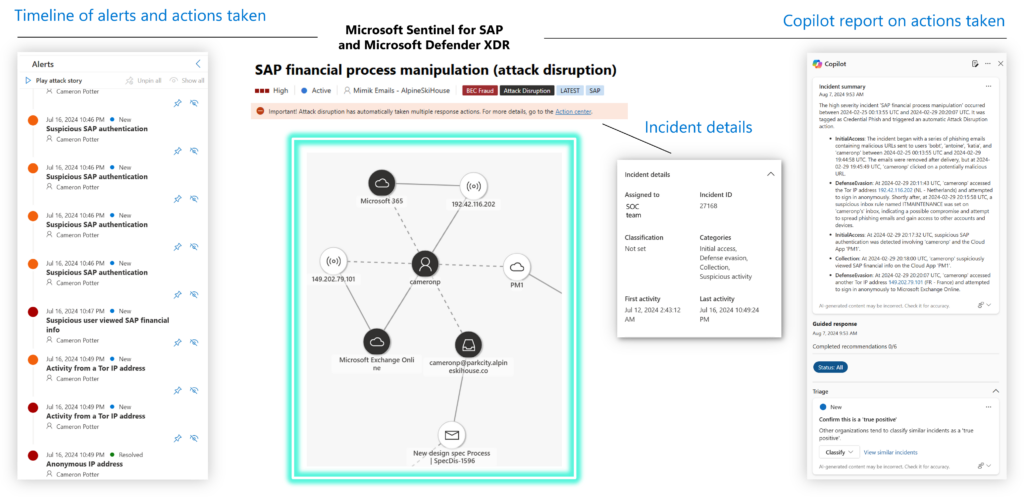
BOSTON, MA., September 30, 2025 – Onapsis, a global leader in SAP cybersecurity and compliance, today announced the launch of a new integration between its flagship Onapsis Defend threat monitoring product and Microsoft Sentinel Solution for SAP, based on Microsoft’s AI-powered cloud-native Security Information and Event Management (SIEM) platform. The integration provides security operations centers (SOC) with unified visibility and threat detection and response capabilities for SAP security events.

SOC teams struggle with a profound visibility gap into activity happening in their mission-critical SAP landscapes, which commonly serve as foundational systems of record for enterprises. This gap includes identifying SAP threats, detecting SAP-targeted exploits and zero-day activity, suspicious user or insider behavior, sensitive data downloads, security control violations and more. The new integration provides organizations with a superior early warning system with proprietary exploit detection rules for business-critical SAP applications, enabling their security teams to detect exploit attacks on vulnerable SAP systems before patches are even released.

“The collaboration extends the power of Onapsis’ SAP-endorsed, industry-leading threat monitoring directly into Microsoft Sentinel Solution for SAP,” said Sadik Al-Abdulla, Onapsis Chief Product Officer. “By unifying Onapsis’ context-rich insights with Microsoft Sentinel’s Solution for SAP, enterprises can investigate and respond to SAP threats faster, meet strict disclosure requirements with confidence and strengthen their security posture across both on-prem, cloud and RISE with SAP environments.”

Key benefits of the integration include:

  • Specialized Exploit and Zero-Day Detection: The Microsoft Sentinel Solution for SAP offers advanced pre-patch exploit protection and early warning alerts against cyberattacks, enriched with threat intelligence from Onapsis Research Labs and their Global SAP Threat Intelligence Network. This collaboration enhances Microsoft Sentinel’s native SAP capabilities with specialized insights from one of the industry’s most trusted research teams.
  • Context-Rich Alerts, Designed for the SOC: SAP events are uniquely enriched with detailed explanations, mitigation guidance, and anomaly scoring from the SAP cybersecurity experts at the Onapsis Research Labs to accelerate investigations
  • AI-Powered Security Insights: The powerful Microsoft Sentinel Solution for SAP and Microsoft Security Copilot AI capabilities, combined with the security insights and threat intelligence from Onapsis, offer superior identification of sophisticated attacks affecting your SAP and broader environment.
  • Unified Security Operations: With market-leading SAP threat and exploit detection from Onapsis, organizations can push security events to Microsoft Sentinel Solution for SAP for correlation with broader enterprise events to streamline incident handling and reduce response times through a unified view of the overall threat landscape in the Microsoft Unified SecOps Platform.

“Microsoft takes a holistic approach to SAP security, moving beyond isolated conversations. By integrating threat intelligence across the enterprise, and Security Copilot into Microsoft Defender Portal, we demonstrate that security isn’t limited to SAP Applications or data – it is about the whole ecosystem,” said Martin Pankraz, Product Manager, SAP Security, Microsoft. “Onapsis complements that effort with their market-leading pre-breach capabilities such as SAP exploit and zero-day detection, SAP Vulnerability Management or ABAP Code Security. We’re delivering deeper protection for our customers’ SAP landscapes, empowering them to respond to SAP threats faster and keeping them far ahead of the latest SAP attacks and exploitation techniques from malicious threat actors.”

It has been a watershed year for defenders marked by a series of high-profile SAP vulnerabilities, zero-days and global attack campaigns that led to hundreds of enterprises being compromised. Despite SAP’s rapid patching, security practitioners are still faced with the ongoing challenge of protecting their business-critical applications in a sophisticated threat landscape. Considering the notable success of well-funded threat actor groups targeting SAP applications, directly combined with significantly stricter regulatory requirements under EU NIS2 and SEC rules in the US, and the looming deadline for migration to SAP S/4HANA through RISE with SAP, organizations find themselves under unprecedented pressure to better secure their SAP landscapes. The Onapsis integration with Microsoft Sentinel Solution for SAP directly addresses these challenges by giving SOC teams the visibility and control needed to rapidly respond to an increasing number of threats to critical SAP systems.

Availability

The Onapsis Defend for Microsoft Sentinel Solution for SAP integration is available today. Pricing and further details available through Onapsis sales representatives or authorized systems integrators. For more information, please visit the Microsoft Azure Marketplace.

About Onapsis

Onapsis is the global leader in SAP cybersecurity and compliance, trusted by the world’s leading organizations to securely accelerate their SAP cloud digital transformations with confidence. As the SAP-endorsed and most widely used solution to protect SAP, the Onapsis Platform empowers Cybersecurity and SAP teams with automated compliance, vulnerability management, threat detection, and secure development for their RISE with SAP, S/4HANA Cloud and hybrid SAP applications. Powered by threat insights from the Onapsis Research Labs, the world’s leading SAP cybersecurity experts, Onapsis provides unparalleled protection, ease of use, and rapid time to value, empowering SAP customers to innovate faster and securely. Connect with Onapsis on LinkedInX, or visit https://www.onapsis.com.

Categories: News

Tags:

Symphony Talent Earns Six Industry Honors for Employer Brand Excellence at the 2025 EBMAs

Stg Partners

Symphony Talent, a global leader in talent acquisition solutions, proudly announced its recognition at the 2025 Employer Brand Management Awards (EBMAs), taking home three Gold, one Silver, and two Bronze honors for The Studio at Symphony Talent’s innovative and impactful employer brand work with global clients bp and Standard Chartered.

“These awards reflect the powerful outcomes that can be achieved when innovative thinking meets strong client collaboration,” said Kermit Randa, CEO, Symphony Talent. “Employer brand is the thread that ties together every stage of a full-funnel talent acquisition strategy. Partnering with bp and Standard Chartered, we’ve shown how effectively activating that brand can accelerate hiring success, strengthen long-term talent strategies, and drive measurable impact.”

Categories: News

Tags:

BeSound: Diagnosing Masses for the Masses

Kindred Ventures

Our Investment in BeSound

Breast cancer screening is broken. Mammograms, invented in the 1950s, remain the dominant tool despite their limitations. They miss 40% of breast cancers in women with dense breast tissue. The process itself is slow and fragmented: book a doctor’s appointment, wait weeks, undergo a manual exam, then a screening image, then a diagnostic image. For many women, this means weeks of anxiety while answers remain out of reach. The FDA recently updated its guidelines requiring providers to notify women with dense breasts that mammograms may not be enough, sending 40 million women a letter that underscores the shortcomings of today’s system.

BeSound is building an alternative: AI-powered ultrasound that collapses weeks of steps into a single visit. By pairing FDA-approved photo-acoustic ultrasound machines with proprietary AI, BeSound delivers precise functional imaging tailored to each woman’s biology. Unlike mammograms, BeSound delivers answers in hours and has been shown in real-world studies to reduce unnecessary biopsies by up to 75%.

That vision is why we’re excited be co-leading BeSound’s $6.76 million seed alongside Overwater Ventures, Muse Capital, and Lux Capital.

Why We Invested

After an hour with Bailey Renger, we were immediately struck by her unusual background. Her technical expertise, knack for brand, and intuition for the changing shape of healthcare present a rare triple threat. Bailey began her career in science, working in an optics lab, at NASA, and at Harvard in quantum computing before starting a PhD in physics at Brown. But during that time, she faced a medical crisis: “I always wanted to be a physics professor… but when I started experiencing severe pain, my doctors told me it was just cramps. I pushed for an ultrasound, and they found a tumor in my ovary. Then I had to wait months for an MRI. That gap in care was the catalyst for me leaving my PhD to start this company.”

Her story underscores why she is so close to the problem. With one in eight women expected to face breast cancer, Bailey’s blend of scientific training and lived urgency gives BeSound a rare edge. The company is positioned to deliver fast, accurate, and scalable diagnostics—offering hope to millions.

Looking Ahead

BeSound is launching first in Los Angeles with its inaugural West Hollywood location, where women can book same day appointments starting at $349. The company is expanding rapidly, including New York in the coming months, bringing FDA approved technology, hospital grade precision, and expert reviewed results within 24 hours.

In the near future, breast cancer screening will shift from decades-old, one size fits all mammograms to AI-powered functional imaging that adapts to each woman’s biology. The future isn’t just about finding cancers earlier, it’s about giving women fast, precise answers, and building an experience that puts them at the center of care.

Join the waitlist at BeSound.

Categories: News

Tags:

Credo Acquires Hyperlume to Advance the Future of AI Connectivity

SOSV

Today, we’re excited to announce that our SOSV portfolio company and HAX startup development program graduate Hyperlume, a pioneer in MicroLED-based optical interconnect technology, has been acquired by Credo (NASDAQ: CRDO).

This marks a major step forward in delivering secure, high-speed connectivity solutions that are more reliable, energy efficient, and ready for the AI era.

Impact on the AI World

The explosion of AI and hyperscale data center workloads is pushing existing connectivity infrastructure to its limits. Traditional electronic interconnects face serious energy and bandwidth bottlenecks that slow scaling and increase costs.

GPU performance has improved ~40,000x since 2000. But the networks that connect those chips have only improved ~80x, creating a significant bottleneck. Today, most GPUs still transfer data via copper cables, an antiquated method that’s cheap but highly inefficient (it generates excessive heat and wastes energy). Laser-based optical cables exist, but they’re 5x more expensive than copper and don’t scale well within tightly packed racks where 40% of the interconnects live.

To keep pace with the exponential growth of data, the world needs a new class of connectivity.

That’s where Hyperlume’s breakthrough MicroLED technology comes in. By using high bandwidth, low latency, low power interconnects for AI data centers and high-performance computing systems, Hyperlume has created a new way to overcome the energy and bandwidth bottlenecks inherent in traditional electronic interconnects.

With this acquisition, Credo now offers one of the most comprehensive connectivity platforms in the industry and strengthens their ability to help customers scale massive AI networks more efficiently and sustainably.

Huge congratulations to Hyperlume co-founders Mohsen Asad (CEO) and Hossein Fariborzi (CTO). When they first joined HAX in 2023, as part of our ever-expanding thesis into next-gen compute and data centres power, their mix of deep technical expertise and conviction is why we invested early.

Read more in Credo’s press release announcing the acquisition here.

Carlyle and BECON Investment Management Announce Strategic Distribution Partnership in Latin America and US Offshore Markets

Carlyle

New York and Buenos Aires – September 30, 2025 – Global investment firm Carlyle (NASDAQ: CG) and BECON Investment Management (“BECON”) today announced a strategic distribution partnership focused on Latin America and the US offshore wealth market. This partnership brings together Carlyle’s global investment capabilities with BECON’s deep expertise in regional distribution and its strong understanding of the Latin American wealth ecosystem.


The partnership aims to meet the increasing demand for alternative investments among qualified and high-net-worth investors in the region. Distribution will cover select Latin American markets (excluding Brazil and Chile), and the broader US offshore market, with an emphasis on key wealth centers such as Miami, New York, Texas, and California. Through this partnership, BECON will distribute three of Carlyle’s most innovative semi-liquid vehicles via wealth management platforms, including broker-dealers, private banks, family offices, and multi-family offices.


This partnership represents a significant step in expanding access to institutional-quality private market strategies. Both firms are committed to delivering long-term value and innovation to investors seeking diversification, performance, and liquidity in today’s evolving market landscape.


“We are pleased to partner with BECON to bring Carlyle solutions to a broader range of qualified investors across Latin America,” said Shane Clifford, Head of Global Wealth at Carlyle. “The demand for alternative assets continues to accelerate in Latin America, yet access remains fragmented. By combining Carlyle’s capabilities with BECON’s strong relationships across the wealth channel, this partnership significantly expands the reach of our platform and helps democratize access to quality private strategies.”


“We are proud to work alongside Carlyle, one of the most respected names in global private markets,” said Fred Bates, Managing Director at BECON. “Through this alliance, we can offer differentiated, institutional-caliber strategies that respond to the evolving needs of our clients and their portfolios.”


As part of this collaboration, Carlyle and BECON will launch a series of initiatives to enhance financial literacy and strengthen advisor expertise. The program will feature webinars and live events, targeted educational content, and technical training to support wealth managers and financial advisors in navigating alternative assets.


“Our goal is not only to distribute products, but to foster knowledge and trust around alternative assets,” said Lucas Martins, Managing Director at BECON. “Education is key to building long-term relationships and helping advisors serve their clients better.”


“We see this partnership as a bridge between global innovation and regional opportunity. Empowering advisors with the right tools and insights is at the heart of our mission,” said Juan Fagotti, Managing Director at BECON.


About Carlyle

Carlyle (NASDAQ: CG) is a global investment firm with deep industry expertise that deploys private capital across its business and conducts its operations through three business segments: Global Private Equity, Global Credit, and Carlyle AlpInvest. With $465 billion of assets under management as of June 30, 2025, Carlyle’s purpose is to invest wisely and create value on behalf of its investors, portfolio companies, and the communities in which we live and invest. Carlyle employs more than 2,300 people in 27 offices across four continents. Further information is available at www.carlyle.com. Follow Carlyle on X @OneCarlyle and LinkedIn at The Carlyle Group.


About BECON Investment Management 

Becon Investment Management is an exclusive independent third party distributor focused on the US Offshore and Latin American markets. The team has operated in the Americas for decades, achieving market leadership status for some of the world’s leading investment managers. Becon operates in the following key markets: Argentina, Uruguay, Paraguay, Chile, Brazil, Peru, Colombia, Venezuela, Ecuador, Bolivia, Panama, Caribbean, Mexico and US Offshore. The team has spent years building relationships with professional investors from a variety of backgrounds including institutional pension funds, private banks, brokerage houses, insurance providers, family offices, and independent financial advisors.


Media Contacts:


Carlyle


Kristen Ashton

+1 212-813-4763

Kristen.ashton@carlyle.com


BECON


Florencio Mas

fmas@beconim.com

Categories: News

Tags:

CVC DIF to divest Portuguese highway concessions Norte Litoral and Algarve to Igneo Infrastructure Partners

CVC Capital Partners
  • During CVC DIF’s ownership, both concessions delivered stable performance and resilient cash flows, driven by active operational management by CVC DIF’s local investment team
  • The transaction reflects CVC DIF’s strong focus on realising value for its investors, supported by the expertise of its dedicated Divestments team

CVC DIF, the infrastructure strategy of leading global private markets manager CVC, is pleased to announce that it has agreed to sell its interests in the Portuguese highway concessions Norte Litoral and Algarve to Igneo Infrastructure Partners.

The Norte Litoral concession covers the A27 and A28 highways (113km) and runs until 2031, while the Algarve concession covers the A22 highway (133km) which expires in 2030. Both operate under availability-based public-private partnership models with a revenue-sharing component, providing predictable, inflation-linked cash flows.

CVC DIF first invested in these concessions in 2017, later consolidating its position in 2020. Under CVC DIF’s ownership, the projects delivered stable operational performance and resilient cash flows, further enhanced by active operational involvement through effective governance at board level. Portugal remains an attractive market for CVC DIF, which will continue to seek new investment opportunities in the country.

Quotes

This transaction is a strong example of CVC DIF’s differentiated exit capability – delivering value from mature concessions, in a market where successful realisations require selectivity, preparation and timing. It highlights our ability to match divestments with the right long-term owner while continuing to generate distributions for our investors.

Andrew FreemanPartner and Head of Divestments at CVC DIF

Closing of the transaction is subject to customary approvals. CVC DIF’s investments in  Norte Litoral and Algarve are held through the DIF Infrastructure IV, DIF Infrastructure VI funds and DIF IV co-investment vehicles.

CVC DIF was advised on the transaction by Santander (financial) and CS Associados (legal)

Categories: News

Tags:

AURELIUS to acquire Landis+Gyr’s EMEA metering business

Aurelius Capital
  • AURELIUS has entered into a share purchase agreement to acquire Landis+Gyr’s EMEA metering business
  • The business generated net revenues of more than $600m in FY24 and employs about 2,700 people at five production sites across the EMEA region
  • Landis+Gyr EMEA is a leading provider of metering solutions predominantly for electricity, thermal and gas in residential and commercial applications

London/Luxembourg, September 29, 2025 – AURELIUS Private Equity Mid-Market Buyout has entered into a share purchase agreement to acquire the EMEA metering business from SIX Swiss Exchange-listed Landis+Gyr for an enterprise value of $215m.

The transaction scope of Landis+Gyr EMEA encompasses the full metering portfolio for residential electricity, ICG electricity, gas, thermal, as well as the related integrated solutions for software and services and operations in Europe, the Middle East and Africa.

With foundations dating back over a century and deep roots in Swiss precision engineering, Landis+Gyr EMEA has developed a strong reputation for high-quality products. Based on this reputation, AURELIUS sees attractive growth opportunities across the company’s portfolio and regions. AURELIUS’ dedicated in-house operations advisory team AURELIUS WaterRise will also support Landis+Gyr EMEA to realise its full potential as a standalone business by focusing on delivering the carve-out and working with management on identified levers to grow revenues and improve bottom line profitability.

Fabian Steger, Managing Director AURELIUS Funds IV and V, says: “I am pleased to see the momentum AURELIUS has built in a challenging M&A market, identifying many attractive carve-out opportunities and converting them into transactions. The acquisition of Landis+Gyr’s EMEA business is another example of this.”

Franz Woelfler, Partner at AURELIUS Investment Advisory, says: “Landis+Gyr’s EMEA business benefits from favourable fundamental trends in the metering market. AURELIUS is excited to partner with management and the business’ highly skilled employees to bring the enterprise to its full potential, but also to contribute to a more resource-efficient world through its market-leading technology.”

The transaction is subject to customary regulatory approvals and other closing conditions. It is expected to close in Q2 2026.

AURELIUS was advised by Alantra (M&A), Baker McKenzie (Legal), EY (Financial and Tax), Roland Berger (Commercial), Aon (Insurance), and Haver & Mailänder (Antitrust).

About AURELIUS

AURELIUS is a global private equity investor, distinguished and widely recognised for its operational approach. It focuses on private markets, in particular Private Equity and Private Debt. Its key investment platforms include AURELIUS Opportunities V, AURELIUS European Opportunities IV, AUR Portfolio III and AURELIUS Growth Investments (Wachstumskapital). AURELIUS has been growing significantly in recent years, especially expanding its global footprint, and today employs more than 400 professionals in 9 offices spanning Europe and North America.

AURELIUS is a renowned specialist for complex investments with operational improvement potential such as carve-outs, platform build-ups or succession solutions as well as bespoke financing solutions. To date, AURELIUS has completed more than 300 transactions, and has built a strong track record of delivering attractive returns to its investors. Its approach is characterised by its uncompromising focus on operational excellence and an unrivalled ability to efficiently execute highly complex transactions.

More info: www.aurelius-group.com

AURELIUS media contact:

Harald Kinzler
Head of Communications
harald.kinzler@aurelius-group.com
+44 7785 722 191

Categories: News

Tags:

How 3i Reinvented itself

1KB Entrance Jan 25 (2)

Published in Redburn Review, by Rothschild & Co I Redburn, September 2025.

By market capitalisation, 3i is among the top twenty companies listed on the London Stock Exchange. It is larger than such notable businesses as Haleon, Tesco and Vodafone. The ascension of 3i, a mid-market private equity investment company, has been a surprise for benchmarkaware investors. Its rise has been meteoric – the shares have risen 300% in the past five years – its structure as an investment company is unique, and the engine behind its share price appreciation, a 58% stake in the Dutch discount retailer Action, is by no means a household name.

Pre-dating 3i’s recent rise to prominence is a fascinating history. For many years, it carried out a function of national importance for Britain, mediating between SMEs, the City and the government.

3i’s origins can be traced back to the 1931 Macmillan Committee, which highlighted a shortage of longterm capital for smaller businesses, colloquially known as the ‘Macmillan Gap’. This gap reflected the absence of reasonable funding options for smaller businesses, which lacked the scale to list on public exchanges. As ministers and the Bank of England planned for post-war reconstruction, aware the Macmillan Gap could widen further, proposals crystallised into the formation of two new bodies in 1945: the Finance Corporation for Industry (FCI) to support larger firms, and the Industrial and Commercial Finance Corporation (ICFC) to supply medium- and long-term capital to smaller ones.

The then ‘big five’ clearing banks (Barclays, Lloyds, Midland, National Provincial and Westminster) were seen as the logical source for the ICFC’s capital given a sharp increase in assets during the war. At the time, the banks were reluctant to provide the required seed capital given divided opinions about the existence of the Macmillan Gap and reservations over replicating the continental banking system. However, they eventually conceded and supported the establishment of the ICFC, if only to prevent Whitehall from intervening in their activities further.

Led by a small, highly motivated team, the ICFC had sufficient independence to survive the conflicting interests of the government and its own sceptical shareholders. For the first twenty years, it was led by its Chairman, Lord William Piercy, who had held senior private and public roles after beginning work in the City as a timber broker at the age of just twelve.

In its early years, the ICFC required sound judgement when allocating funds. Many companies had grown on the back of war production while others did not have an established profit record. The ICFC was ahead of its time, building in-house due-diligence capabilities with greater detail than traditional bankers, utilising technical knowledge, examinations of factories and operating accounts, and personnel audits.

By the 1950s, a regional network had been established to spread the geographic base of its investments and pave the way for its specialists to become locally informed investors. The ICFC generally provided investment via long-term, fixed-rate loans which offered certainty and were carefully priced so as not to overstretch firms. Equity investment was also provided to lessen the risks posed by leverage.

Over the latter part of the century, considerable change would occur. The ICFC’s success would help to normalise professional investment in unquoted British companies, paving the way for new competition. In the 1970s it merged with the FCI to establish Finance for Industry (FFI), and by the 1980s had been renamed ‘Investors in Industry’, or ‘3i’.

As capital markets in the UK and Europe evolved, 3i’s model followed, transitioning from an SME funder into a modern private equity house which targeted fewer but larger buyouts. In 1994, 3i listed on the London Stock Exchange with a £1.5bn market capitalisation. It was then that the company broadened the scope of its fundraising, raising its first external fund totalling £225m.

The venture capital industry in the UK soared in the late 1990s and early 2000s, but the fallout from the dotcom boom saw the number of firms collapse. 3i had also grown rapidly, opening offices across North America and Asia. The considerable returns it made in technology companies over 1999 and 2000 were quickly lost, but its geographic diversification, portfolio mix and strong balance sheet provided a partial buffer.

Over the following years, economic recovery underpinned recovery in the business. Impressive investment returns and fundraising propelled the group forward and fuelled chunky distributions to shareholders.

However, the upswing was fleeting, with the Global Financial Crisis causing a deterioration in conditions for private equity firms. By December 2008, 3i’s shares had fallen below its 1994 listing price and were trading at a 75% discount to their net asset value. The leverage carried by the group into the crisis forced new management to raise £732m via a rights issue to recapitalise, and catalysed a strategic shift that prioritised streamlining, including exits from existing investments.

The 3i investors recognise today started to take shape in 2011. Simon Borrows, an ex-banker who had advised on the 3i IPO in 1994 while at Barings Bank, joined as CIO and became CEO in May 2012. In June 2012, he announced a bold strategy for the company, which he noted was “too decentralised and lack[ing] focus and consistency”.

Under his plan, 3i would reduce staff, magnify its geographic focus and cut its number of investments. His approach offered several advantages. The smaller team and narrower portfolio helped to improve sharpness in asset allocation, and its focus on exits raised enough funds to ensure the company could deploy its own balance sheet capital rather than external funds. The benefit of proprietary capital is 3i can let winners run, rather than exiting investments on the typical five-toseven-year private equity cycle. It also no longer needs to deploy capital when market valuations become frothy or exit investments when conditions are poor.

The past decade has seen 3i develop a phenomenal track record. This is illustrated by its share price, which on a total return basis has delivered 30% growth pa since Borrows announced his strategic shift in June 2012. While this change in fortune reflects a focused investment company which has executed admirably, a large part pertains to the incredible performance of Action, a leading European non-food discount retailer.

In 2011, 3i and third-party investors acquired Action from its founders. At the time of acquisition, Action operated 250 stores across three countries and generated c€80m in EBITDA. Through 3i’s ownership and involvement, Action today operates more than 3,000 stores across fifteen countries and generates EBITDA above €2bn pa. While 3i has lifted its stake in Action over time – mostly self-funded from the proceeds of Action’s dividends – the prevailing valuation of 3i’s 57.9% stake in Action is £19.2bn, a sum many leagues higher than its initial investment of £134m. Today, Action comprises 71% of 3i’s portfolio and is the primary reason it trades at a c45% premium to net asset value.

While Action has undeniably been an incredible investment, it must be acknowledged that without the 2012 pivot and restoration of the balance sheet, 3i would have not been afforded the opportunity to hold its stake over the long term and generate the gains it has.

From plugging the post-war Macmillan Gap to funding Europe’s fastest-growing discounter, the 3i of 2025 is a very different beast to the ICFC of 1945. However, at its core, the principles which define 3i are largely unchanged: it manages patient proprietary capital and is fortunate enough to have the freedom over when to act.

Download article as PDF

Categories: News