SurveyMonkey today announced its latest SurveyMonkey AI innovations, including a new AI Analysis Suite and supercharged survey creation tools. The new features are designed to help users ask better questions, make smarter decisions, and move faster.
“SurveyMonkey has always been in the business of capturing real human sentiment and turning it into action,” said Meera Vaidyanathan, Chief Product Officer at SurveyMonkey. “AI now lets us do this faster and smarter—automating the legwork, surfacing insights that were previously hidden, and helping our customers act with greater confidence. With 25 years of history and more than 100 billion questions answered, we’re uniquely positioned to deliver trusted AI that makes feedback not just easier to gather, but far more powerful.”
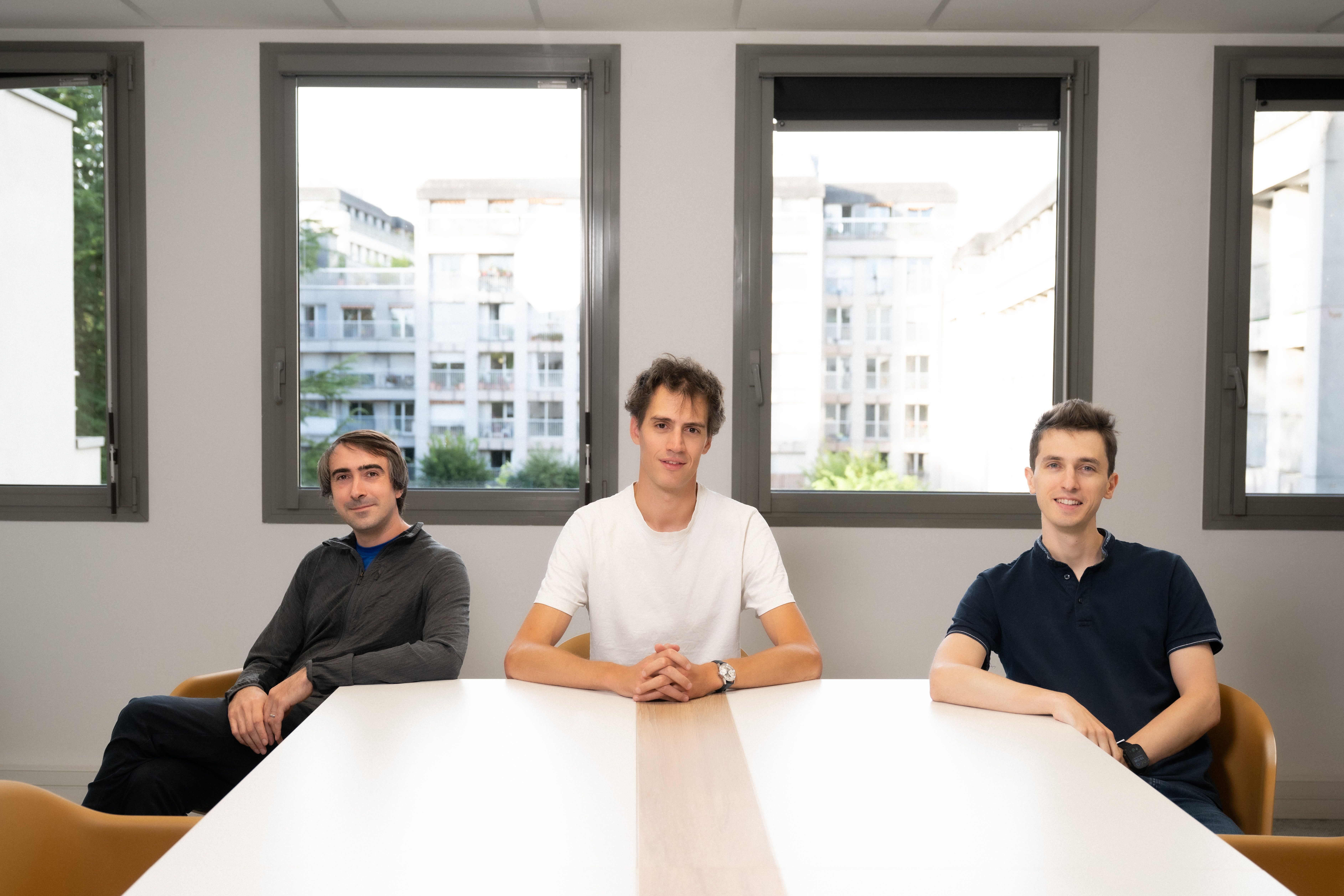
Strong relationships create their own serendipity. A few years ago, my colleague Jan Hammer and I were visiting the Paris HQ of Alan, the digital health insurance platform in which Index was an early investor. Alan’s CEO and co-founder, Jean-Charles Samuelian-Werve, mentioned that he was incubating an open-source AI startup called Mistral a couple of floors below. After meeting his co-founder Arthur Mensch, we knew we had to be part of the journey.
Index invests in people as much as we invest in companies – which is why, after cutting that first seed check for Mistral, we’re thrilled to be continuing to support Arthur and the team in their latest funding round. At heart, Arthur is the kind of deeply technical engineer who could easily be building Mistral’s core models himself. Yet he’s shown himself to be talented at communicating Mistral’s bigger vision to customers, investors and policymakers. As a founder, it’s rare and incredibly powerful to be able to flip so fluidly between the close-up and the birds-eye view of your company.
That macro perspective is crucial as Mistral rides – and drives – a transformational wave in how businesses use AI. It’s no longer an experimental, ‘nice-to-have’ technology that employees are using ad-hoc; instead, we’re moving towards a world in which every major company will need to have a customized intelligence at its core. ASML’s decision to strategically partner with Mistral is a reflection of this. Mistral has shown impressive execution in building custom decentralized frontier AI solutions to solve the most complex engineering and industrial problems. More than simply selling cutting-edge models and LLMs, Mistral is en route to becoming the implementation partner of choice for enterprise – a one-stop shop for organizations putting AI to work at scale.
Mistral is the unquestioned AI leader being built out of Europe. Yet what excites us most is that it’s still early days. The enterprise AI market is just beginning to take shape, and Mistral’s success sets it up to be one of the big winners over the long term. We’re delighted to support them as they build the crucial AI infrastructure of tomorrow.
THE DETAILS
Mistral AI raises €1.7bn to accelerate technological progress with AI
Mistral announced a Series C funding round of €1.7bn at a €11.7bn post-money valuation. This investment fuels the company’s scientific research to keep pushing the frontier of AI to tackle the most critical and sophisticated technological challenges faced by strategic industries.
The Series C funding round is led by leading semiconductor equipment manufacturer, ASML Holding NV (ASML).
“ASML is proud to enter a strategic partnership with Mistral AI, and to be lead investor in this funding round. The collaboration between Mistral AI and ASML aims to generate clear benefits for ASML customers through innovative products and solutions enabled by AI, and will offer potential for joint research to address future opportunities.” said ASML CEO Christophe Fouquet.
For the last two years, Mistral has advanced AI through cutting-edge research and strategic partnerships with corporate and industrial champions. They will continue to develop custom decentralized frontier AI solutions that solve the most complex engineering and industrial problems. It powers enterprises, public sectors, and industries through state-of-the-art models, tailored solutions, and high-performance compute infrastructure.
“This investment brings together two technology leaders operating in the same value chain. We have the ambition to help ASML and its numerous partners solve current and future engineering challenges through AI, and ultimately to advance the full semiconductor and AI value chain”, said Mistral AI CEO Arthur Mensch.
SurveyMonkey today announced its latest SurveyMonkey AI innovations, including a new AI Analysis Suite and supercharged survey creation tools. The new features are designed to help users ask better questions, make smarter decisions, and move faster.
“SurveyMonkey has always been in the business of capturing real human sentiment and turning it into action,” said Meera Vaidyanathan, Chief Product Officer at SurveyMonkey. “AI now lets us do this faster and smarter—automating the legwork, surfacing insights that were previously hidden, and helping our customers act with greater confidence. With 25 years of history and more than 100 billion questions answered, we’re uniquely positioned to deliver trusted AI that makes feedback not just easier to gather, but far more powerful.”
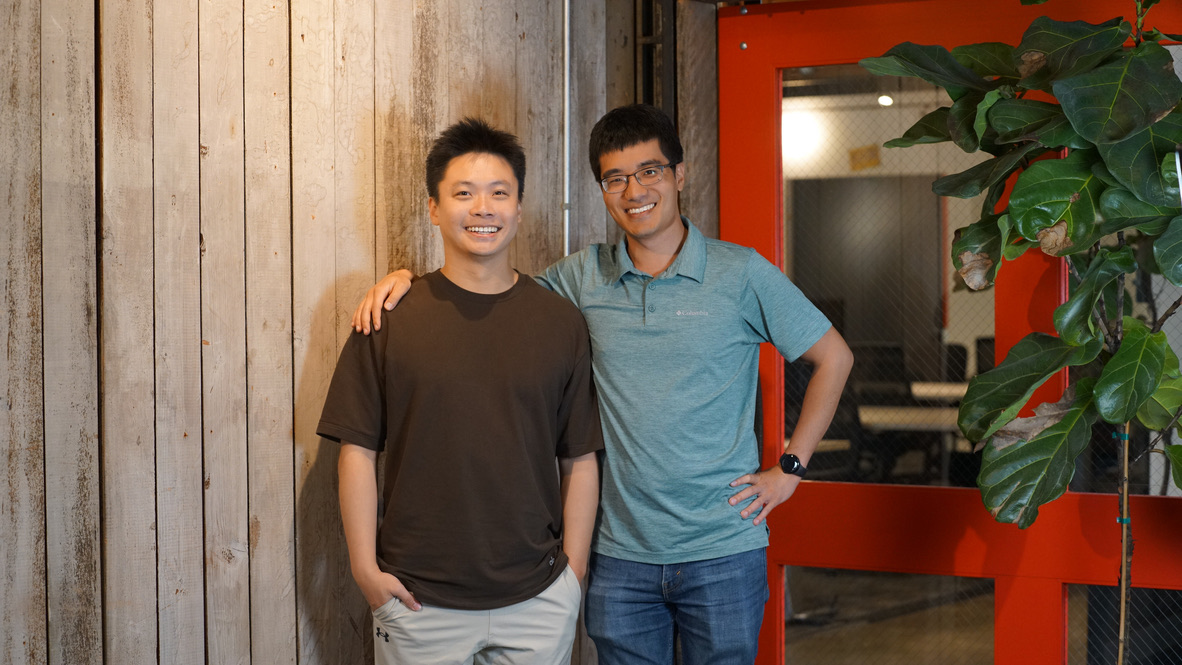
Nuance Labs Co-Founders Fangchang Ma and Edward Zhang
We’ve all experienced the uncanny valley: the slight discomfort when watching an AI avatar speak, the sense that something fundamental is missing despite impressive technical capabilities. Today’s AI can reason brilliantly and generate human-like text, but when it comes to emotional intelligence, AI remains surprisingly tone-deaf.
That’s where Nuance Labs comes in. We at Lightspeed are excited to invest in their seed round alongside Accel as they build what we believe will become a foundational layer for emotional intelligence in AI.
As IQ becomes commoditized through increasingly capable language models, emotional quotient (EQ) emerges as the critical differentiator. Yet we believe current AI systems fundamentally miss this dimension. AI avatars feel robotic, not because of pixel quality, but because they lack the subtle emotional expressiveness that makes human faces compelling, and they are far from real-time responsiveness.
Nuance’s breakthrough insight mirrors that of large language models: just as LLMs learned to understand meaning by predicting the next word, AI can understand emotions by learning to predict human emotions and behavior.
Nuance Labs is building a unified foundation model for real-time generation and understanding of realistic human expression across multiple simultaneous modalities, including text, speech, and video. This unlocks new categories of AI interaction:
Real-time emotional generation: Lifelike avatars that don’t just speak words but convey appropriate emotional responses through coordinated facial expressions, vocal inflection, and body language. Imagine AI therapists that pause thoughtfully, offer encouraging expressions, and adapt their demeanor to your emotional state, all in real-time.
Real-time emotion understanding: AI systems that can read subtle emotional cues as they happen, enabling applications like live coaching systems that detect when you’re losing confidence during a presentation, or interview AI that understands not just what candidates say but how they say it.
The team brings exceptional depth: Fangchang Ma and Edward Zhang previously built research teams at Apple, contributing to products like Vision Pro’s Digital Persona system. Their combined expertise in computer graphics, robotics, and machine learning, along with thousands of academic citations, strongly positions them to solve this technically complex challenge.
We’re entering an era where AI interactions will be measured not just by accuracy or speed, but by emotional authenticity. Any interface where humans interact with AI, from customer service and education to entertainment and healthcare, will benefit from emotional intelligence. We believe Nuance Labs is building the infrastructure that will power this next generation of AI experiences.
The uncanny valley stands as a barrier to natural human-AI interaction. Nuance Labs is building a bridge that will enable an entire ecosystem of emotionally intelligent AI applications. We’re thrilled to support their mission to make AI interactions as natural and emotionally rich as human conversation itself.
Excited to bring emotional intelligence to artificial intelligence? Nuance is hiring.
The content here should not be viewed as investment advice, nor does it constitute an offer to sell, or a solicitation of an offer to buy, any securities. Certain statements herein are the opinions and beliefs of Lightspeed; other market participants could take different views.
Four years ago, we met Harry Qi and his co-founders over coffee in San Francisco. The product itself was still raw, but the team’s conviction was undeniable. They weren’t just chasing a clever feature; their goal was to redefine how millions of people work.
That belief led us to back Motion’s SeriesA in 2020. Four years later, we’ve doubled down with super-prorata participation in every round, including Motion’s newly announced $60M raise at a $550M valuation across Series B, C, and C2.
From niche tool to category-defining agentic suite
Like many startups, Motion started with a niche focus: An AI-powered calendar and task manager that was a smart wedge into a noisy space. The founders quickly realized they were onto something bigger. Managing tasks solved part of the problem, but what if the platform could take the next step and execute them?
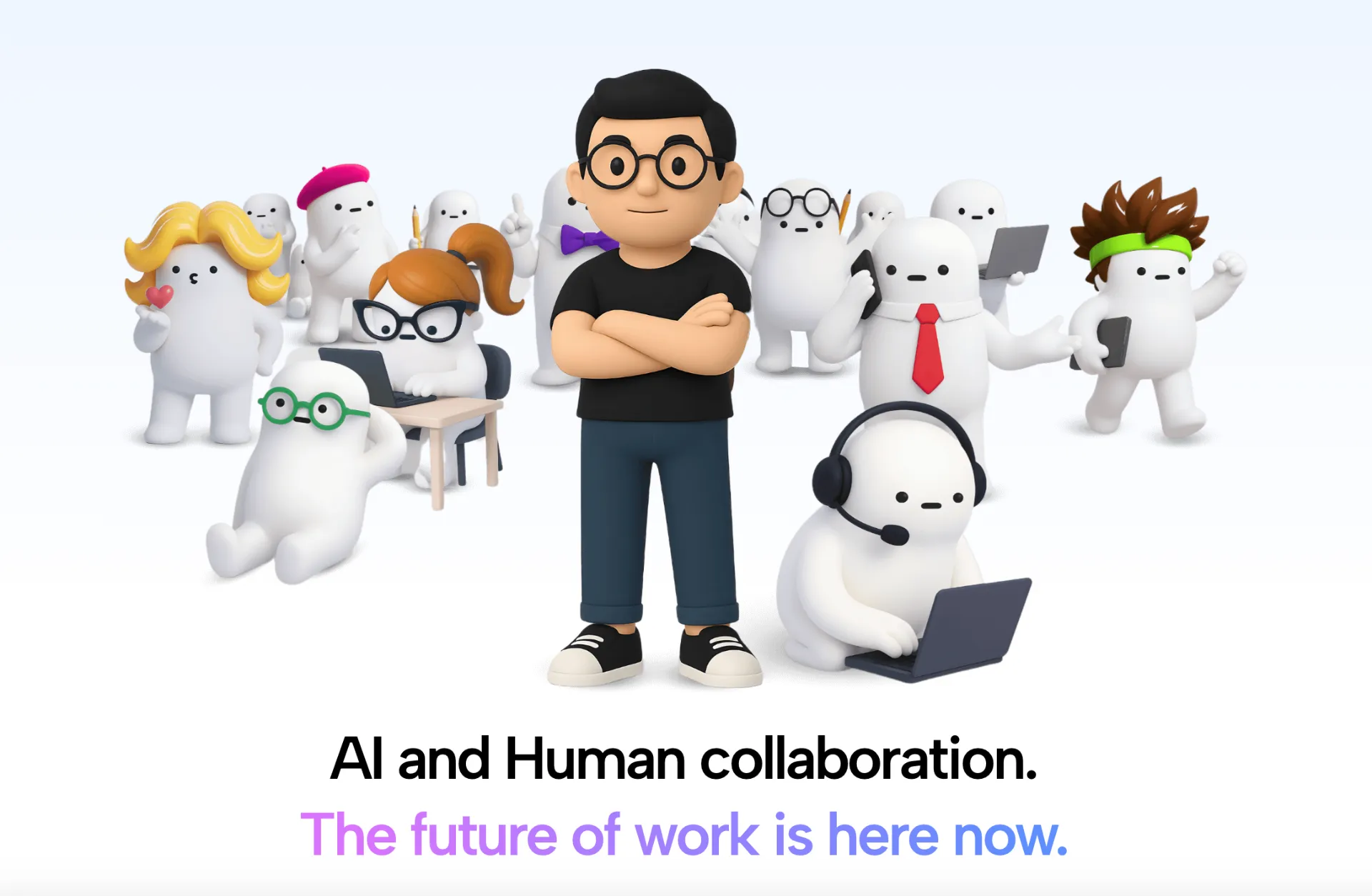
They began expanding Motion into what it is today: a complete agent-native work suite. Beyond calendars, Motion powers project management, docs, sheets, tasks, knowledge management, and business intelligence, designed for seamless human and AI collaboration.
The team’s latest innovation is ‘AI Employees.’ Think of them as out-of-the-box digital teammates that don’t just track work, but complete it. They can draft proposals, update project plans, and respond to client requests, all within the same platform their human teammates use.
We always asked ourselves: “Why should AI tasks live outside the systems where human tasks already run?” By unifying them, we unlock 100 times the value and give SMBs the same leverage that Fortune 500s get from expensive custom AI builds.
Harry Qi
Co-Founder & CEO, Motion
A playbook any founder can learn from
Watching Motion scale has been a masterclass in startup building. For founders, these are the lessons worth underlining:
Velocity wins. Motion ships with a speed that’s rare even in Silicon Valley. Features move from whiteboard to customer hands in days, not quarters.
Reinvent to expand. Calendaring was never the endgame. The team continuously reinvented the product until they unlocked a path to building the entire work suite of the agentic era, perhaps what Microsoft Office would look like if it were invented today.
Stay close to your customer. While big enterprises experiment with armies of AI engineers, Motion stayed focused on SMBs, which are the backbone of the economy. Over 80% of new ARR comes from this segment.
The results speak for themselves: 100,000+ paying customers, ARR tripling year-over-year, and $10M in new ARR from ‘AI Employees’ in just four months.
Built for everyday businesses
AI headlines often center on Big Tech or bleeding-edge AI labs, but Motion’s north star is different: the everyday businesses that keep America running.
Think of a design agency in Tennessee, a small IT firm in Alabama, or a marketing shop in Texas. These aren’t companies with dedicated AI teams; they’re lean teams that answer their own phones, juggle client deadlines, and need a system that simply works.That’s what Motion delivers: a platform where human and AI employees sit side by side, running the business together.
The impact is tangible:
An IT services CEO credits Motion’s AI project manager with cutting delivery time by 30%.
Marketing agencies report saving hours each week thanks to AI-powered executive assistant agents.
Customers say Motion is the first platform where “AI feels truly built-in, not bolted on.”
For their customers, Motion is the core operating system for how they work.
In just a few years, a single human will manage hundreds of AI Employees completing thousands of tasks inside the Motion platform. Our vision has always been to help everyday businesses grow by letting AI handle the busywork, so humans can focus on what really matters.
Harry Qi
Co-Founder & CEO, Motion
Why we’re doubling down on this team
We’ve partnered with Motion through its biggest wins and its toughest challenges, and what stands out is how the team shows up in both moments. Four years in, their co-founders are still working shoulder-to-shoulder. They’ve since welcomed seasoned leaders like Luis Carrasco (ex-Microsoft Teams), Antonio Garcia (ex-Salesforce), and Ashutosh Desai (founder of Make School and former Visiting Partner at Y Combinator) to the team, blending startup urgency with enterprise-scale experience. The culture they’ve built is ambitious yet humble, fast, and thoughtful.
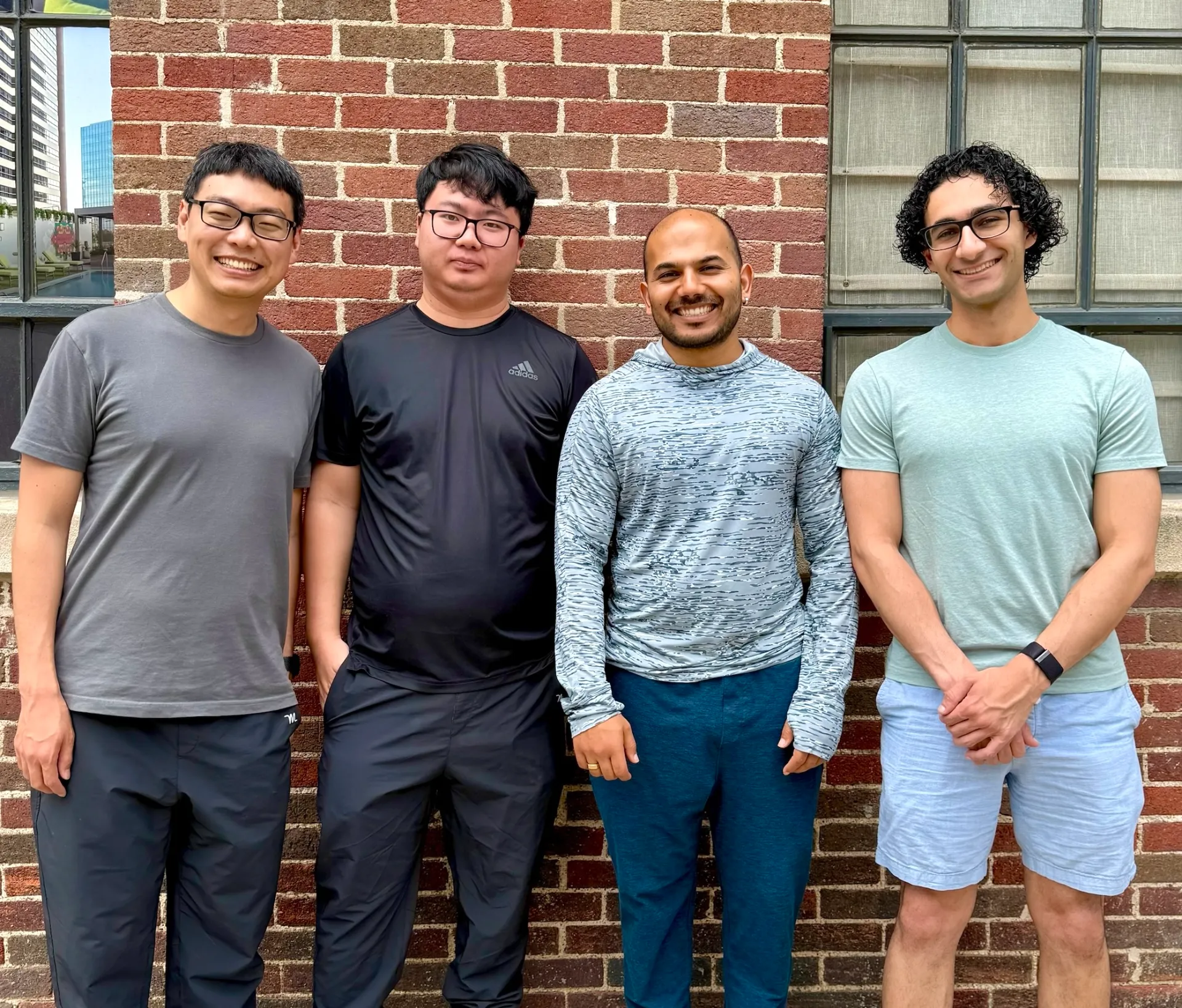
Motion founders: Ethan Yu, Harry Qi, Chander Ramesh, and Omid Rooholfada.
This is a team built to win big. Here’s how they describe their recent momentum:
Growth: B2B ARR growing 3x year-over-year and scaling 20% month-over-month.
Product-market fit: Over 80% of ARR comes from SMBs and mid-market customers (businesses that need ready-to-use solutions, not armies of consultants).
We’ve continued to lean in because Motion is exactly the kind of team and market opportunity we’re excited to back. At SignalFire, we couldn’t be prouder to have been there since the beginning, and to keep backing Harry and the team at every step forward.
Join the mission – an invitation to builders
Motion is now a 65-person team with the drive of a scrappy startup and the ambition of a category-definer. With this new funding, they’re hiring across engineering, product, and AI research to expand the agentic suite and push the frontier of what’s possible.
For founders, Motion’s story is a reminder to start narrow, move fast, listen obsessively, and never stop reinventing. For builders, it’s an opportunity to help shape the next great work suite for the AI era, which empowers everyday businesses to thrive.
How can startups and developers actually monetize their AI products? A startup called Koah, which recently raised $5 million in seed funding, is betting that ads will be a big part of the answer.
If you spend any time online, there’s a good chance you’ve seen plenty of ugly, AI-generated ads — but few to none when interacting with AI chatbots. Koah co-founder and CEO Nic Baird argued that will inevitably change.
“Once these things get outside San Francisco, there’s only one way to make [them profitable] on a global scale,” Baird told TechCrunch over Zoom. “It’s happened time and time again.”
To be clear, Koah isn’t trying to introduce advertising to ChatGPT. (That’s probably something OpenAI will do for itself one day.) Instead, it’s focused on the “long tail” of apps that are built on top of the big models, including apps with a user base outside the United States.
Baird suggested that when consumer AI products were first becoming popular, it made sense for them to focus on “wealthier, prosumer” users and to monetize those users by converting some of them into paid subscriptions.
But now someone could build an AI app that reaches millions of users in Latin America, and those users are “not paying 20 dollars a month,” Baird said. So the developer could struggle to bring in subscription revenue, but “they have the same inference costs as everyone else.”
Image Credits:Koah
Baird suggested that by successfully figuring out how to make advertising work in AI chats, Koah could actually unlock more potential for “vibe coded” apps that might otherwise be “too expensive to operate at scale” unless their creators raise VC funding.
Join 10k+ tech and VC leaders for growth and connections at Disrupt 2025
Netflix, Box, a16z, ElevenLabs, Wayve, Sequoia Capital, Elad Gil — just some of the 250+ heavy hitters leading 200+ sessions designed to deliver the insights that fuel startup growth and sharpen your edge. Don’t miss the 20th anniversary of TechCrunch, and a chance to learn from the top voices in tech. Grab your ticket before Sept 26 to save up to $668.
In fact, Koah is already serving ads in apps like AI assistant Luzia, parenting app Heal, student research tool Liner, and creative platform DeepAI. Its advertisers include UpWork, General Medicine, and Skillshare.
These ads are marked as sponsored content, and they’re supposed to appear at relevant moments in your chats. For example, if you’re asking for advice about startup business strategies, the app could show you an ad from UpWork offering to connect you with freelancers who could work with your company.
When Koah talks to publishers, Baird said many of them believe that ads simply don’t work in AI chats, while others have found limited success with AI offerings from older adtech companies like AdMob and AppLovin.
But Baird said Koah is 4x to 5x more effective, delivering clickthrough rates of 7.5%, and with early partners earning $10,000 in their first 30 days on the platform. He added that Koah achieves all that while having less of a detrimental effect on user engagement — though his ultimate goal is for Koah ads to feel relevant enough that they actually improve engagement.
Image Credits:Koah
Koah’s seed round was led by Forerunner, with participation from South Park Commons and AppLovin co-founder Andrew Karam.
Forerunner partner Nicole Johnson echoed many of Baird’s points when discussing the investment over email. She said that when it comes to AI, monetization is “the elephant in the room amongst builders and investors.” And while the “going standard for monetizing consumer AI services is subscription,” focusing exclusively on subscriptions can “quickly lead to fatigue and churn.”
“Multiple revenue models in Consumer AI are inevitable, and if the past decades of internet services are any indicator, ads will play a major role,” Johnson said. In her view, Koah is “building the essential monetization layer for consumer AI services.”
As for where AI chats fall in the larger advertising ecosystem, Baird and his team have found they represent the middle of the purchase funnel — somewhere between the awareness raising of an Instagram ad and the actual purchase that might be driven by ads in Google search.
“People are not transacting on AI — they’re just not,” Baird said. They might ask a chatbot for recommendations or product details, but then “they’re going to Google to buy.” So part of the challenge for Koah is figuring out the best ways to capture a user’s “commercial intent.”
“It’s not interesting to me to try to figure out, ‘How do we show a display ad in AI?” Baird said. Instead, he wants to understand, “What is the user looking for and how do we give that to them?”
Anthony Ha
Anthony Ha is TechCrunch’s weekend editor. Previously, he worked as a tech reporter at Adweek, a senior editor at VentureBeat, a local government reporter at the Hollister Free Lance, and vice president of content at a VC firm. He lives in New York City.
Ubitec and Bencis join forces to accelerate AI adoption in the public sector.
Bencis is excited to announce its partnership with Ubitec – a European provider of AI solutions with a clear focus on data sovereignty. Ubitec primarily works with organizations in the public sector as well as with companies that require the highest levels of data security. Its solutions are designed to ensure full control over sensitive data while meeting the highest standards of security, transparency, and compliance – a trusted European alternative to non-European providers.
Ubitec develops highly customizable solutions based on proprietary technology frameworks. This enables the company to address the specific requirements of the public sector on the one hand, while also meeting the strict demands for data protection and tailored systems on the other. With this combination, agentic systems can be applied across a wide range of use cases – from targeted support services to the orchestration of complex process chains. Thanks to its close customer relationships, Ubitec is also able to continuously identify new areas where AI technologies can create measurable value. The goal is to shape digital transformation in line with demographic change and the growing demands for efficiency and service quality – both in the public sector and in security-critical industries of the private sector.
Through this partnership, Bencis and Ubitec pursue the strategic goal of building a European AI champion. The focus lies on consistently delivering customized, data-sovereign AI solutions from Europe, which are increasingly important not only for public institutions but also for companies handling sensitive data. The joint vision is to create a European counterpart to the currently dominant offerings of international hyperscalers – driven by European partners who develop solutions on equal footing and can scale them within the European market.
Bencis will support Ubitec in scaling its operational activities to meet growing demand and unlock new growth opportunities. The foundation for this lies in Ubitec’s experienced team, proprietary technologies, and deep understanding of market requirements in security-critical environments.
About Ubitec
Ubitec is an innovative provider of AI solutions for the public sector with a leading position in Germany and Austria. The tech company was founded by its current managers Dieter Perndl and Dominik Aumayr and is headquartered in Linz, Austria. For more information, visit: www.ubitec.at
About Bencis
Bencis is an independent investment company with advisory offices in the Netherlands, Germany, and Belgium that supports business owners and management teams in achieving their growth ambitions. Managing six funds totalling €2.2 billion, Bencis has invested in over 80 companies and completed more than 330 follow-on acquisitions since 1999. For more information, visit: www.bencis.com
Bessemer Venture Partners leads Recall.ai’s $38M Series B to help teams capture and leverage conversational data at scale.
Conversations are arguably the world’s largest data set. Yet, the data and context that fuel today’s AI revolution are often relegated to what’s already documented or structured. Conversation data, on the other hand, just floats in the ether. But every strategy meeting, sales call, customer complaint, brainstorming session, doctor consult, and coffee chat holds something invaluable: context.
Agents and applications need context
Conversation and meeting data offer vital context to supercharge AI agents and apps. Enter Recall.ai — the infrastructure that makes it effortless to capture and leverage this data at scale and in real time. The ability to gain insights from conversation data is enabling the emergence of new markets and products. This burgeoning ecosystem includes many of our portfolio companies, like Abridge, Rilla, and Avantos. Recall.ai underlies this trend, which is why we’re proud to lead the company’s $38M Series B round.
In every modern organization, meetings are where crucial context is shared, customer knowledge is exchanged, and decisions are made. Until now, accessing and scaling that flood of meeting data intelligently — across platforms, formats, and workflows — has been a challenge. Recall.ai solves this by providing a single, robust solution that abstracts the complexity.
One API, every platform
Recall.ai provides a unified API and developer platform for conversation intelligence. It powers meeting bots, captures and distills video, audio, and metadata across platforms, including Zoom, Microsoft Teams, Google Meet, Webex, Slack, Desktop, and more. Recall.ai handles it all — from unlimited concurrent Virtual Machine infrastructure to real-time transcripts, audio and video streams, and granular metadata, like speaker identification and screen sharing — all delivered securely.
As the infrastructure behind thousands of conversation intelligence products, processing many billions of minutes annually, Recall.ai is growing quickly across developers and enterprises. Leaders and innovators like HubSpot, DataDog, Calendly, Instacart, Charlie Health, Rippling, and ClickUp all rely on Recall.ai. The company has grown 12X in 2023 and 3X in 2024, and is on track for a record 2025, with recent launches including Desktop Recording SDK, Calendar Integration, and Storage and Playback, with a Mobile SDK in beta and other major releases coming soon.
Customers get up and running within hours instead of spending months building custom infrastructure and dedicating ongoing headcount to maintenance. Teams save 500+ developer hours of engineering time by offloading meeting data management to Recall.ai. This allows companies to ship fast and free up precious development resources.
Why we’re backing the team behind Recall.ai
The idea for Recall.ai stemmed from a problem that cofounders David Gu (CEO) and Amanda Zhu (COO) experienced firsthand while building their previous company, a real-time transcription tool for video conferences. They realized the bulk of their engineering team’s resources were consumed by building, scaling, and maintaining integrations with platforms.
Recognizing that this infrastructure challenge was plaguing others, David and Amanda launched Recall.ai in 2022. The small but mighty team is relentless in solving complex technical challenges and offering customers and developers robust, delightful, and dependable infrastructure. The team is also growing. Check out opportunities at Recall.ai here.
We’re excited to back this all-star team as it enables a growing ecosystem of innovative applications. If you’re building applications or agents that could be supercharged with context and need to access, analyze, or act on conversation data, try Recall.ai.
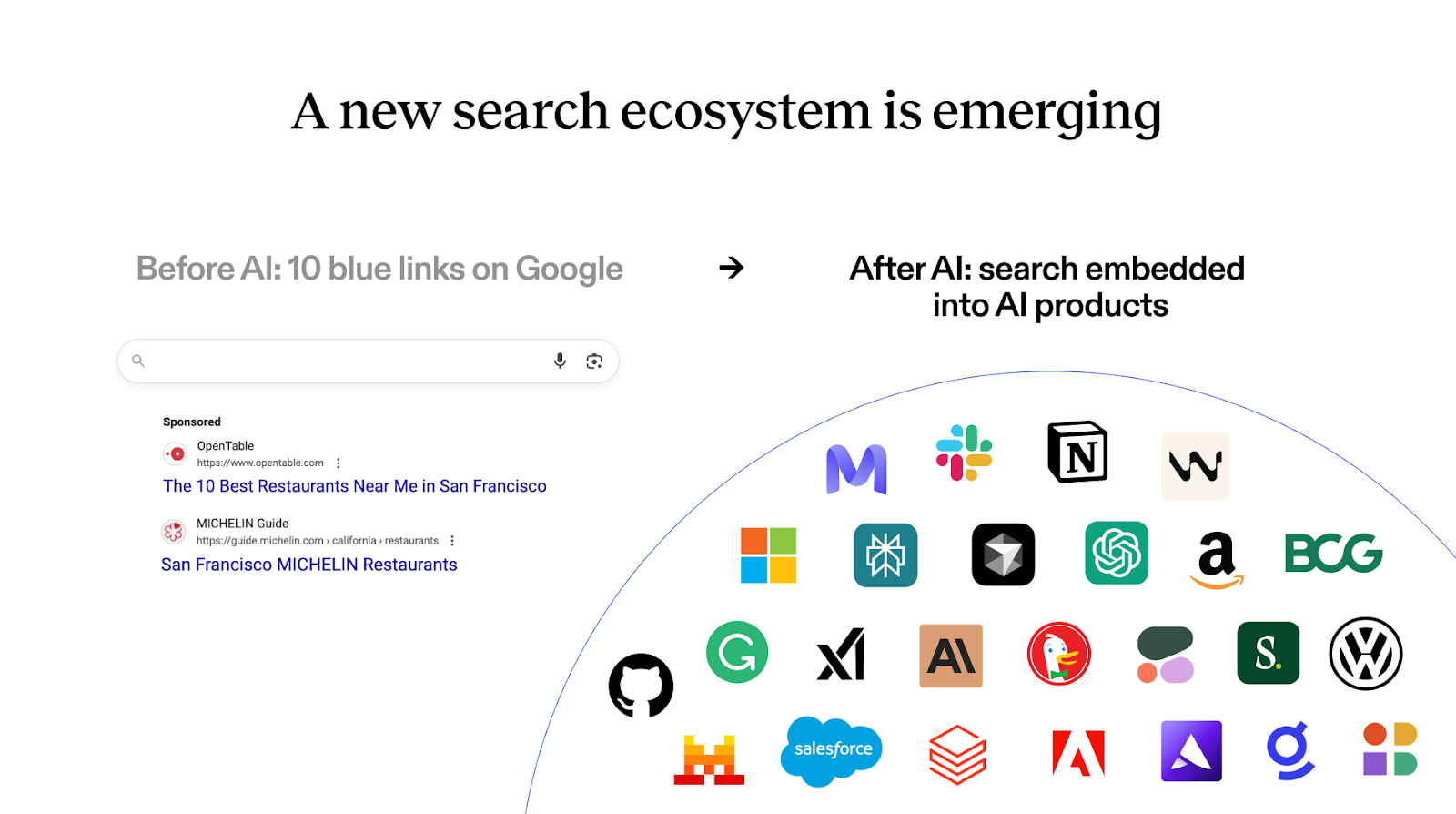
AI agents and AI-native products are here. These AIs need access to information, critical context that helps them perform at their best. “Garbage in, garbage out” still applies — no matter how intelligent the model, its reasoning is contingent on the availability of fresh, accurate data. In other words, they need search. Application builders are rapidly integrating and embedding search capabilities into a range of AI products – from consumer apps to B2B tools. This is where Exa comes in.
Exa is an applied AI lab training a search engine optimized for AI agents to perfect web search and improve upon the “ten blue links” paradigm that Google defined in the early days of the web. Exa’s goal is to create the world’s most powerful search technology, and unlike Google, they aren’t bound by optimizing for consumer clicks and SEO.
When Lightspeed led Exa’s Series A round last year, agents were only just beginning to take off. Now, they’ve taken over.
Exa has become the leading search engine for AI. For example, AI coding products like Cursor use Exa to retrieve technical documentation to output well-informed, up-to-date code. Today, thousands of developers, AI startups, and enterprises are building on top of the Exa API.
It’s why we’re excited to double down on our investment as part of Exa’s $85M Series B round, led by Peter Fenton at Benchmark Capital, alongside participation from YCombinator and NVIDIA Ventures. Peter served on the board of Elastic, the last major search company built, so we are delighted to see he shares our conviction about this massive opportunity.
Agents are merely large language models paired with appropriate tools. We believe search is one of the two big “killer tools” for agents, along with code execution. With code execution, agents become “Turing complete”, enabling them to write programs on the fly. With search, agents become “information complete” — they can acquire any public information needed to accomplish a task.
While AI models are trained on increasingly vast sums of data, AI models cannot perfectly memorize all the information on the public web, as their recall is unreliable. Further, there’s always a “last mile” of data — private data, alternative data sources, etc. — which will never end up in the training data of these models. For AIs to work with and reason about this data, they require search capabilities.
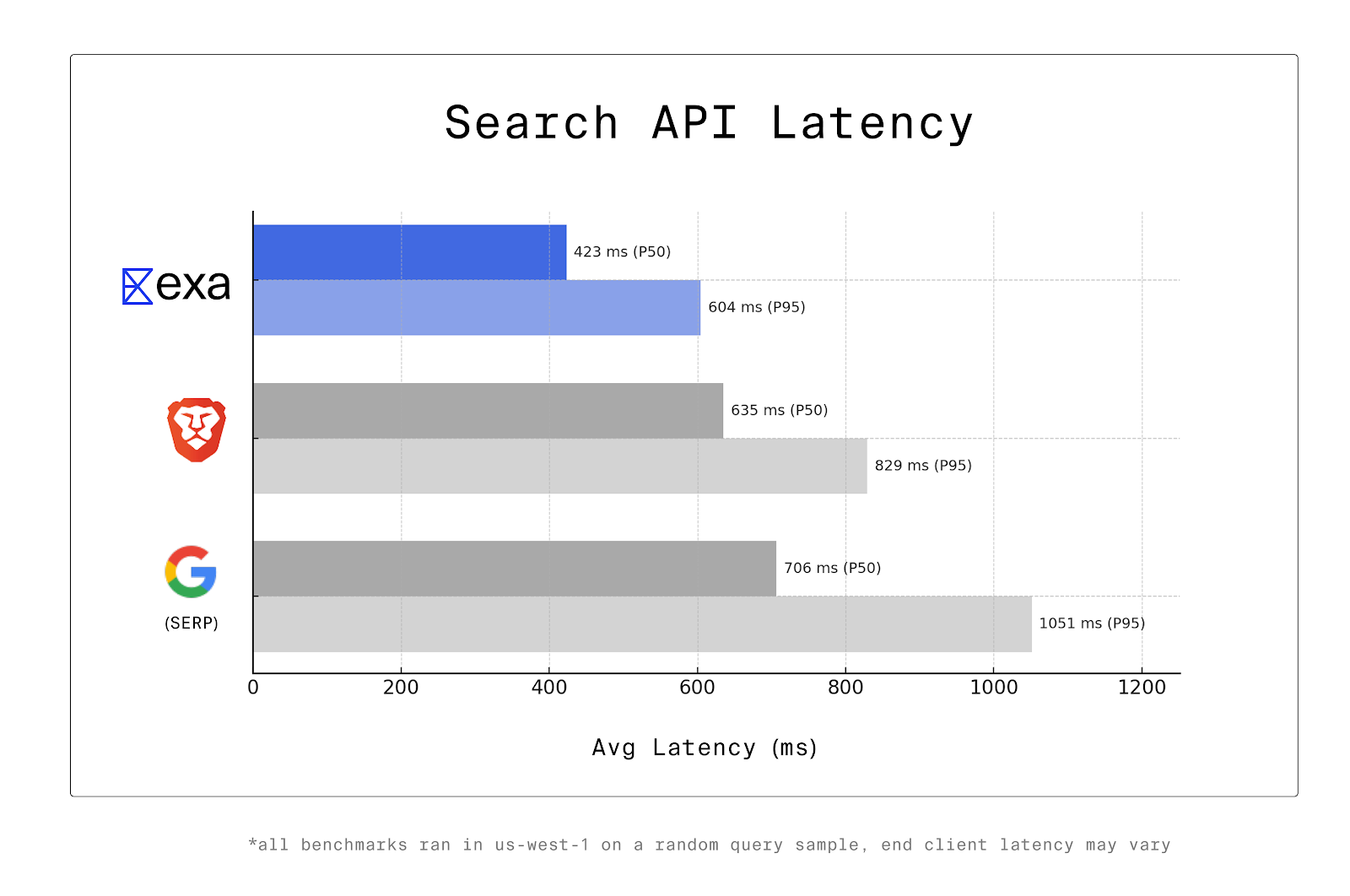
Exa is strategically positioned to power search for AI. Exa indexes billions of web documents, processes through them all with their custom models, and serves them through a state-of-the-art search and retrieval stack. The quality and craftsmanship of the Exa team is evident through benchmarks, where Exa is best-in-class in terms of relevance and latency.
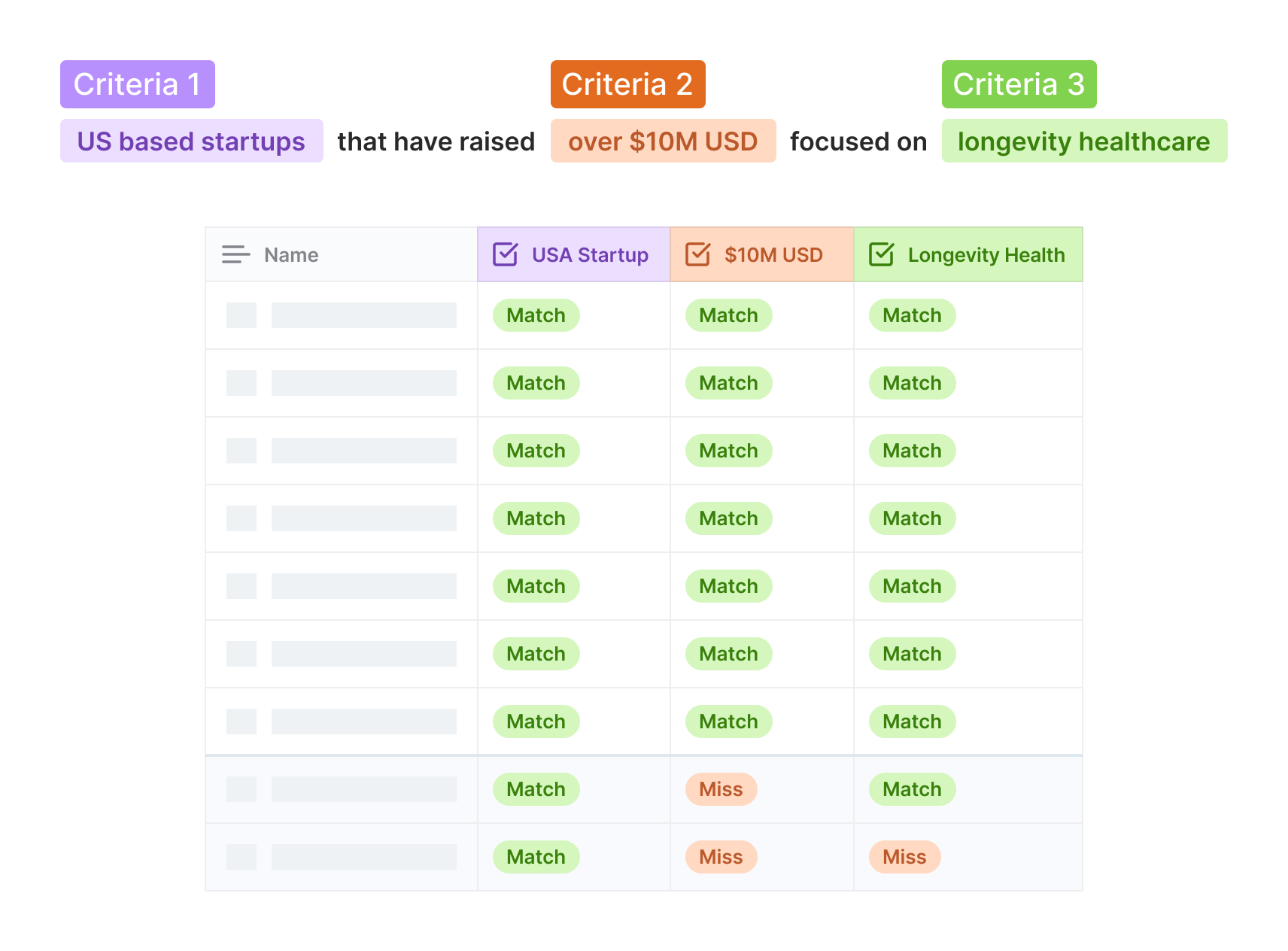
This incredible performance is no longer limited to AI consumption — Exa now serves human users too via its new product, Websets, an agentic search tool for extracting structured information from the unstructured web. Non-technical users can write a query asking for lists of people, companies, and more (e.g., “US-based startups that have raised over $10M USD focused on longevity healthcare”) and get hundreds of results matching the exact criteria, verified by Exa’s AI agents. Websets has become incredibly popular for recruiting, lead generation, and market research use cases.
But they aren’t stopping there: the Exa team has set out an aggressive product roadmap for the coming years, with the goal of powering every AI app, indexing beyond the public web, and becoming the AI world’s data layer.
We are heading toward a future where AIs search far more than humans, where most search queries actually originate from an AI of some kind rather than a human. We believe this new world will require AI-native search infrastructure to support this new, rapidly growing consumer of the web.
That’s Exa — a single API to get any information from the web, built specifically for AI products. Lightspeed is proud to continue supporting Exa’s vision of perfect search. If you want to work on industry-changing, high-impact, massive-scale challenges, apply here.
The content here should not be viewed as investment advice, nor does it constitute an offer to sell, or a solicitation of an offer to buy, any securities. Certain statements herein are the opinions and beliefs of Lightspeed; other market participants could take different views.
Surging demand for decision automation in commercial and specialty insurance fuels Indico’s record ARR gains and global expansion
Boston, MA – September 2, 2025 – Indico Data, the leading Agentic Decisioning Platform for commercial and specialty insurance, today announced record annual recurring revenue (ARR) alongside 60% year-over-year growth in new carrier customers during the first half of 2025. This momentum underscores the market’s demand for AI-driven solutions that enable faster, more accurate underwriting and claims decisions while maintaining compliance and oversight. The results come at a critical time, as insurers face unprecedented submission volumes, limited underwriting capacity, and escalating operational costs.
In the first six months of 2025, Indico has expanded its customer base and added a number of top-tier carriers across North America and the UK, while existing customers expanded beyond initial deployments to encompass submission intake, clearance, policy issuance, and claims workflows. Indico welcomed these new customers on the heels of significant product milestones, including the launch of the industry’s first Agentic Decisioning Platform purpose-built for insurance, the release of out-of-the-box ingestion and data enrichment agents, and the attainment of Guidewire ClaimsCenter certification, enabling seamless integration with one of the industry’s leading core systems.
Indico’s leadership has been further validated by Gartner, which recognized the company in two influential 2025 Hype Cycle reports — the Hype Cycle for P&C Insurance in the Digital Underwriting category, and the Hype Cycle for Artificial Intelligence in the Composite AI category.
As the global insurance industry navigates a persistent hard market, economic pressure, and scarcity of skilled underwriting talent, carriers are re-engineering their operations to make faster, more accurate, and more transparent decisions. Indico’s Agentic Decisioning platform addresses these challenges directly, enabling customers to cut manual intake work by up to 100% in high-confidence cases, reduce quote-to-bind cycles from weeks to days, and increase underwriter capacity by automating low-value administrative tasks.
“Insurers are no longer experimenting with AI — they’re operationalizing it at scale,” said Tom Wilde, CEO of Indico Data. “Our record growth and customer expansion in H1 2025 show that Indico has become core decision infrastructure for leading carriers worldwide. The launch of our Agentic Decisioning Platform marks a new phase in insurance transformation, where speed, accuracy, and auditability are built into every decision.”
With additional agentic capabilities set to launch in the second half of 2025, Indico plans to extend its platform deeper into policy servicing and claims operations, while continuing to expand its out-of-the-box workflow library for faster time to value.
About Indico Data
Indico Data turns chaotic submissions into confident decisions. Built for underwriting and claims operations, our Agentic Decisioning Platform uses Generative and Agentic AI to ingest and enrich complex submissions and claims — accelerating triage, eliminating manual work, and surfacing the right risks instantly. Where legacy tools stop at extraction, Indico delivers speed, accuracy, and full transparency across every decision point. Learn more at www.indicodata.ai.