Our Investment in n8n: The AI platform for automation

Accel

Enterprises have reached a tipping point in their AI investments. Pilots are widespread, but most companies have yet to translate those experiments into full workflow transformations. Their ability to capture the value that AI promises depends on integrating an increasing number of task and function-specific AI agents and systems across their businesses.

n8n has built the missing piece that enterprises need in order to translate their AI investments into real, durable value for their organizations. Its central system of record enables companies to build, evaluate, observe, and orchestrate agentic automations across their global operations, all while integrating directly into their existing workflows through over 1,000 native integrations, APIs, ETL connectors, and MCPs.

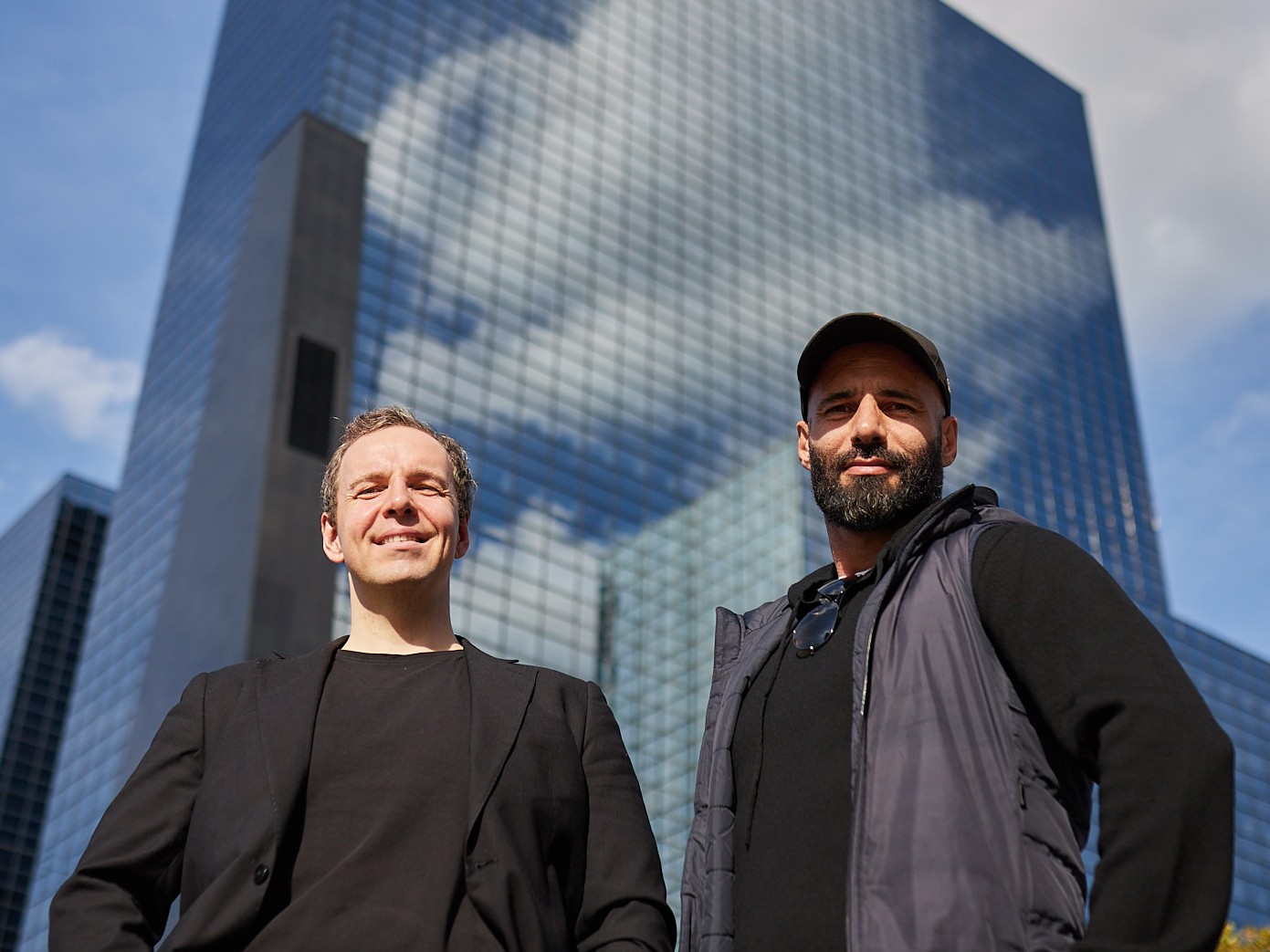
Accel’s Ben Fletcher and n8n’s Jan Oberhauser together in Berlin.

Today, we’re pleased to announce that Accel has led the Series C in n8n’s AI-native workflow automation platform. This funding round follows explosive, capital-efficient growth over the past year that has seen n8n become the underlying infrastructure for orchestrating and integrating agents into leading enterprises. We’re grateful to be joined by a variety of angels and strategic partners, including CrowdStrike’s George Kurtz, NVIDIA’s NVentures, and Deutsche Telekom’s T.Capital.

Previous generations of automation software relied on “if this, then that” deterministic logic. It’s a fundamental mismatch for agentic AI workflows, and diminishes the potential value LLMs promise. n8n has built the automation and orchestration layer for the AI era: today, more than 80% of workflows built on n8n embed AI agents.

n8n has dramatically expanded the share of work that can be automated. Teams can fully customize workflows, mixing AI agents with deterministic steps and team inputs where required. The range of use cases on n8n is vast: AI builders define full backend logic. Fortune 500 companies standardize operations spanning IT, finance, marketing automation, and security orchestration. System integrators have transformed customer support, sales, and DevOps with easy AI automations. No matter where customers are on their AI journey, n8n makes it easy to unlock real value and efficiency gains.

What truly sets n8n apart is its radically open “Fair Code” model and the community it has inspired. n8n has become a Top 50 GitHub Project with over 145,000 stars, and is now supported by a vibrant community of more than 700,000 active developers. n8n users also tend to be n8n evangelists: extending it through workflow templates and integrations, and spreading the word across online forums. Community members now organize over 60 community events around the world each year.  In this, we’ve recognized a similarity with some of Accel’s most notable investments – Atlassian, Slack, Vercel, Webflow –  that built effusive, loyal communities centered around great products.

n8n events around the world focused on builders

At Accel, we’ve long believed in partnering with the builders creating the foundational tools powering software. Accel portfolio companies Cursor, Linear, Lovable, Supabase and Vercel are rapidly defining the next-gen AI stack. n8n is the next step of this thesis, providing the open, community-first operating system to embed AI into daily work. We’re grateful to Jan and his team for trusting Accel as a partner for their next phase of global growth and we look forward to the remarkable journey ahead.

France-based Phagos lands $29m to further develop its antibiotic alternative for livestock

Agfund

[Disclosure: AgFunderNews’ parent company AgFunder is an investor in Phagos.]

Paris, France-based biotech company Phagos has raised a €25 million ($29 million) Series A round to further develop its bacteriophage drugs used to treat bacterial disease in animals and, eventually, humans.

The company calls these drugs “a sustainable answer to the global challenge of bacterial resistance.” It will use the funding to deploy treatments, starting with animal health, as well as further develop its technology that simplifies the discovery process.

CapAgroHoxton VenturesCapHorn, and Demeter co-led the round, which also saw participation from Acurio VenturesCitizen CapitalEntrepreneur FirstFounders Capital, and Station F.

Drug pipeline to fight AMR ‘insufficient’ 

Phagos’ fundraise news comes just days after the World Health Organization released new reports that detail the escalating problem of antimicrobial resistance (AMR) and the “insufficient” pipeline of drugs and innovations needed to tackle drug-resistant bacterial infections.

AMR is expected to cause some 39 million deaths globally over the next 25 years. It is also a leading cause of death among animals, which raises food security and livelihood concerns in addition to those around animal welfare.

In its new reports, the WHO calls for “greater investment in tools designed for resource-limited settings, including those that eliminate the need for culture and simplifying diagnostic platforms for primary and secondary care use.”

The promise of phage therapy 

Bacteriophage—or simply “phages”—are present in everything from soil to the human gut, and regulate the number of bacteria in humans, plants, and animals.

Phagos says that thanks to millions of years of co-evolution with bacteria, phages are specialized to detect specific bacterial targets without harming other cells. This makes them an attractive potential alternative to antibiotics. In animal health, for example, they could be used to treat salmonella or E. coli.

The Phagos platform, dubbed “Alphagos,” combines microbiology with artificial intelligence to diagnose bacterial strains, identify phages that can fight those strains, and develop “ultra-targeted bacterial treatments” that leverage phages, says the company.

These treatments are continuously updated to ensure subjects stay healthy without contributing to AMR.

The company, founded in 2021, has started with solutions for animal health, which it says can be tailored to the needs of a specific livestock operation or environment. Currently, the Phagos phage therapy is deployed across the chicken, cattle, swine, and shrimp sectors. Phagos also recently filed a patent for its AI platform.

“We are convinced that phage therapy can transform the history of medicine just as antibiotics did in the last century,” noted Phagos’ founders Alexandros Pantalis and Adèle James.

“Thanks to our regulatory breakthroughs and our patented platform combining microbiology and artificial intelligence, we now have the opportunity to establish phage therapy as a global reference solution: for animal health today, and for human health tomorrow.”

The Series A financing will go towards further deployment of veterinary phage therapy in the field. Funds will also enable further development of the Alphagos platform as well as international expansion across Europe, Asia, and the Americas.

Paris, France-based biotech company Phagos has raised a €25 million ($29 million) Series A round to further develop its bacteriophage drugs used to treat bacterial disease in animals and, eventually, humans.

The company calls these drugs “a sustainable answer to the global challenge of bacterial resistance.” It will use the funding to deploy treatments, starting with animal health, as well as further develop its technology that simplifies the discovery process.

CapAgroHoxton VenturesCapHorn, and Demeter co-led the round, which also saw participation from Acurio VenturesCitizen CapitalEntrepreneur FirstFounders Capital, and Station F.

Drug pipeline to fight AMR ‘insufficient’ 

Phagos’ fundraise news comes just days after the World Health Organization released new reports that detail the escalating problem of antimicrobial resistance (AMR) and the “insufficient” pipeline of drugs and innovations needed to tackle drug-resistant bacterial infections.

AMR is expected to cause some 39 million deaths globally over the next 25 years. It is also a leading cause of death among animals, which raises food security and livelihood concerns in addition to those around animal welfare.

In its new reports, the WHO calls for “greater investment in tools designed for resource-limited settings, including those that eliminate the need for culture and simplifying diagnostic platforms for primary and secondary care use.”

The promise of phage therapy 

Bacteriophage—or simply “phages”—are present in everything from soil to the human gut, and regulate the number of bacteria in humans, plants, and animals.

Phagos says that thanks to millions of years of co-evolution with bacteria, phages are specialized to detect specific bacterial targets without harming other cells. This makes them an attractive potential alternative to antibiotics. In animal health, for example, they could be used to treat salmonella or E. coli.

The Phagos platform, dubbed “Alphagos,” combines microbiology with artificial intelligence to diagnose bacterial strains, identify phages that can fight those strains, and develop “ultra-targeted bacterial treatments” that leverage phages, says the company.

These treatments are continuously updated to ensure subjects stay healthy without contributing to AMR.

The company, founded in 2021, has started with solutions for animal health, which it says can be tailored to the needs of a specific livestock operation or environment. Currently, the Phagos phage therapy is deployed across the chicken, cattle, swine, and shrimp sectors. Phagos also recently filed a patent for its AI platform.

“We are convinced that phage therapy can transform the history of medicine just as antibiotics did in the last century,” noted Phagos’ founders Alexandros Pantalis and Adèle James.

“Thanks to our regulatory breakthroughs and our patented platform combining microbiology and artificial intelligence, we now have the opportunity to establish phage therapy as a global reference solution: for animal health today, and for human health tomorrow.”

The Series A financing will go towards further deployment of veterinary phage therapy in the field. Funds will also enable further development of the Alphagos platform as well as international expansion across Europe, Asia, and the Americas.

Telmai Brings Autonomous-Ready Data Observability for the Agentic AI Era

.406 Ventures

Telmai’s new Data Reliability Agents deliver AI-ready data at the lake, validated in real-time, with autonomous detection, resolution, and natural language interfaces for agentic workflows.


SAN FRANCISCO, Oct. 7, 2025 /PRNewswire/ — Telmai, the AI-powered data observability platform, today announced its Agentic offerings to make enterprise data truly Autonomous-Ready. These new capabilities ensure agentic AI workflows can communicate, decide, and execute actions on real-time trusted data with minimal human oversight.

Agentic AI significantly changes the requirements for how organizations manage their data and thus their data quality (DQ). Because Agentic AI requires low-latency and real-time access to validated data, it’s imperative that data quality happens right at the source, not downstream, where most companies focus their DQ efforts today.
But validation alone isn’t enough. AI agents also need to understand whether data is truly fit for purpose in the context of their actions. This involves delivering contextual information about data health as metadata into catalogs and semantic layers that AI agents can access.

Only when trust and context are combined can AI agents operate responsibly and enterprises deploy them with real confidence.

Telmai has the unique ability to continuously validate, monitor, and enrich data with quality signals at the lake and can push that data quality metadata for consumption by agents. This creates the trusted foundation that autonomous AI products need to operate reliably and at scale.

With Telmai’s latest product launch, AI agents can continuously access reliable data and the critical data quality context needed to automate downstream workflows.

Real-Time, Continuous, Agentic AI-Ready Data

At the core of this update is the introduction of Telmai’s MCP-compliant server, which enables LLM-powered agents like Claude, Bedrock, or Vertex to query Telmai directly. Telmai continuously validates data, whether structured, semi-structured, or unstructured. Additionally, it generates comprehensive data quality metadata alongside the validated data, providing essential context on data health to ensure the data is reliable and AI-ready. Through the MCP layer, AI agents can access and retrieve validated data and metadata into their agentic workflows, eliminating the need for third-party transformations or complex workarounds.

“In the era of model commoditization, true competitive advantage will emerge from trustworthy, dynamic, and contextually aware data,” said Sanjeev Mohan, industry analyst and principal at SanjMo. “Telmai’s latest release is a big step in this process. It offers continuous validation and contextual metadata that enable AI agents to act responsibly, while reducing the operational debt that has long hindered enterprise adoption.”

Natural Language AI Assistants & Decentralized Data Trust

Building on this foundation, Telmai is introducing a suite of AI assistants called Data Reliability Agents accessible through natural language interfaces, enabling both technical and non-technical users to interact directly with the platform. This decentralization means that ownership of data reliability no longer sits solely with engineering, accelerating time to value by making platform management and critical data quality insights accessible and actionable to all relevant stakeholders.

Autonomous Detection and Remediation

Telmai’s Data Reliability Agents enable autonomous detection and resolution of data anomalies. These intelligent agents continuously monitor data pipelines for irregularities and provide clear, plain-language explanations of root causes. Identifying and resolving complex data quality issues that once required deep technical expertise are now easily understood and addressed by both technical and business teams. Beyond detection, the Data Reliability Agents provide actionable recommendations and assist in generating data quality rules tailored to newly identified anomalies.

Furthermore, these Data Reliability Agents augment existing automated workflows, such as ticket creation and alert triggers, to help data teams proactively adapt and drive continuous improvement in their data quality processes.

This comprehensive approach closes the loop from detection through triage and remediation, ensuring that data being fed into the downstream processes is not only trustworthy but consistently ready for autonomous consumption and decision-making.

“As AI agents take the reins of decision-making, we believe autonomy should never come at the cost of reliability,” said Mona Rakibe, Co-founder & CEO of Telmai. “With these updates, Telmai is laying the groundwork for true intelligent automation and allowing enterprise data teams to shift their focus to driving measurable business value via Agentic AI.”

About Telmai

Telmai is a data observability platform company that enables enterprise data owners to monitor and detect real-time data issues. The platform leverages AI to monitor all data passing through the data pipeline before entering the data warehouse, protecting downstream systems and analytics used for decision-making. Telmai’s open architecture supports anomaly detection closest to data sources and works over complex data types with native support for nested and multi-valued attributes.

For more information, please visit Telmai or request early access.

Contact:
Anoop Gopalam
Product Marketing & Growth @ Telmai
anoop.gopalam@telm.ai

SOURCE Telmai

ValueFactory VC – Another successful exit and dividend distribution

Value Factory

At Value Factory, we build companies together with entrepreneurs that create both impact and value. Today, we’re proud to share that we’re once again delivering a solid return to our investors.

This result is the outcome of:

  • a successful exit from an early-stage investment that no longer fits within our current sustainability focus,
  • and the first returns from our bio-based investments.

Our approach proves itself: we combine entrepreneurship with strategic, hands-on support and a sharp focus on growth sectors where innovation and sustainability go hand in hand. In doing so, we continuously seek synergy between our portfolio companies.

Biobased & Agritech: the perfect match

We strongly believe in the power of Agritech and biobased construction. Agritech innovations help farmers and horticulturists produce more efficiently and sustainably, creating new, high-quality streams of natural raw materials. These find their way into the construction sector, where demand for biobased materials (such as wood, hemp, or mycelium) is growing exponentially.

This creates a circular chain: agriculture provides the raw materials, technology makes them efficiently available, and the construction sector uses them to reduce the massive CO₂ emissions of buildings. This is precisely where the strength – and the future – of Value Factory lies.

We are grateful for the trust of our investors and proud of the entrepreneurs with whom we make this happen. And this is just the beginning: we are further stepping up our focus on sustainable and biobased innovations for the built environment – solutions that contribute to a livable future while delivering attractive returns.

Final opportunity to get in

Our current investment round is approaching its close. For those who still want to join, now is the moment.

Categories: News

Tags:

Rabo Investments portfolio company ThreatFabric secures a strategic Investment from OneSpan to accelerate global fraud and scam prevention

Rabo Investments

UTRECHT – October 6, 2025 – Rabo Investments Corporate Venturing (RICV) is pleased to announce the investment of OneSpan into our portfolio company ThreatFabric, a global leader in proactive fraud detection and mobile threat intelligence. This partnership marks a pivotal moment in ThreatFabric’s mission to protect people from fraud and scams by combining cutting-edge AI, behavioural analytics, device risk and real-time threat intelligence.

The investment will accelerate ThreatFabric’s ability to deliver global excellence in fraud prevention, enabling faster innovation, deeper intelligence, and broader delivery. As fraudsters increasingly exploit mobile devices through malware, social engineering, and remote access tools, ThreatFabric’s layered defense approach is uniquely positioned to detect and disrupt these hybrid threats—before victims are harmed.

“At ThreatFabric, we believe fraud prevention is about more than stopping transactions—it’s about protecting people,” said Han Sahin, CEO of ThreatFabric. “This investment from OneSpan empowers us to scale our mission globally, delivering AI-powered protection that is proactive, privacy-first, and rooted in the best threat intelligence available.”

Founded in Amsterdam in 2015, ThreatFabric protects over 60 million banking customers globally and has been recognized in Gartner’s Emerging Tech reports. The company is backed by Rabo Investments, Motive Ventures, 10x Founders, 14Peaks Capital, and now, OneSpan.

For more information:

https://www.onespan.com/

https://www.threatfabric.com/

AtaCor Medical Secures $75M Financing to Support the Pivotal U.S. Study of its Extravascular ICD (EV-ICD) System

Arboretum

The novel design of AtaCor’s Atala™ lead aims to provide reliable sensing, antitachycardia pacing (ATP), and shock therapies with no hardware placed in the heart or vasculature

SAN CLEMENTE, Calif.Oct. 6, 2025 /PRNewswire/ — AtaCor Medical, Inc., a privately-held medical device company focused on transforming cardiac rhythm management systems, announced today that it has entered into a financing of up to $75 million. The proceeds will fund the company’s U.S. FDA Pivotal Study evaluating AtaCor’s parasternal extravascular implantable cardioverter-defibrillator (EV-ICD) system for the treatment of life-threatening ventricular tachyarrhythmias.

“There is a clear and growing need for extravascular ICD systems that combine a straightforward implant procedure with the ability to deliver the full spectrum of tachyarrhythmia therapies using a small pulse generator,” said Rick Sanghera, Chief Executive Officer of AtaCor Medical. “AtaCor is poised to meet that need. We are proud to close this financing round and excited to initiate our pivotal trial next year.”


AtaCor’s EV-ICD system consists of the Atala™ lead and an implantable pulse generator. The Atala™ lead is implanted via a small left parasternal incision, positioned through the rib space with electrodes placed against the pericardium, outside of the heart and vasculature.  The pulse generator can be placed in either a lateral or pectoral subcutaneous device pocket, representing a novel option for EV-ICD systems. This unique EV-ICD system aims to deliver the benefits of defibrillation and antitachycardia pacing without the long-term risks associated with intravascular or intracardiac leads.

“The AtaCor team is developing a meaningful solution for patients, while protecting the integrity of the heart for future interventions,” commented Maria Berkman, Chair of the AtaCor Board of Directors.  “The Board is delighted to see this infusion of capital in support of AtaCor’s pivotal trial, bringing this important technology one step closer to the bedside.”

AtaCor recently completed enrollment of its ASCEND EV Pilot Study, with initial results accepted for presentation at the upcoming Asia Pacific Heart Rhythm Society (APHRS) meeting this November in Yokohama, Japan. Building on these initial results, AtaCor plans to launch the ALARION EV Pivotal Study in the United States and Europe in 2026, which aims to evaluate the safety and efficacy of the parasternal EV-ICD system and support global regulatory submissions.

The AtaCor EV-ICD Lead System is under development exclusively for investigational use and is not approved for sale in any geography.

About AtaCor Medical, Inc.

AtaCor Medical is transforming cardiac pacing and defibrillation with its proprietary extravascular ICD (EV-ICD) system. The novel design provides the full range of therapeutic capabilities of traditional implantable defibrillators, including defibrillation and antitachycardia pacing, without placing hardware inside the heart or vascular system. AtaCor’s technology both preserves future cardiac treatment options and overcomes key limitations of existing ICD systems.

AtaCor venture investors include Arboretum Ventures, Broadview Ventures, Longview Ventures, Hatteras Venture Partners, Catalyst Health Ventures, and BayMed Venture Partners.

For more information, please visit www.atacor.com.

SOURCE AtaCor Medical Inc.

Categories: News

Tags:

Telmai + Atlan unify trust and context to scale autonomous enterprise AI systems

.406 Ventures

AI pilots fail not because models don’t work, but because data systems lack reliability and context. To scale AI responsibly, enterprises need validated data at the source and metadata enriched with health and governance signals. This article shows how Telmai and Atlan close this gap. Telmai validates data as it lands, while Atlan’s Metadata Lakehouse adds lineage and governance to create the trusted foundation for scaling AI.

Telmai + Atlan


Anoop Gopalam October 3, 2025

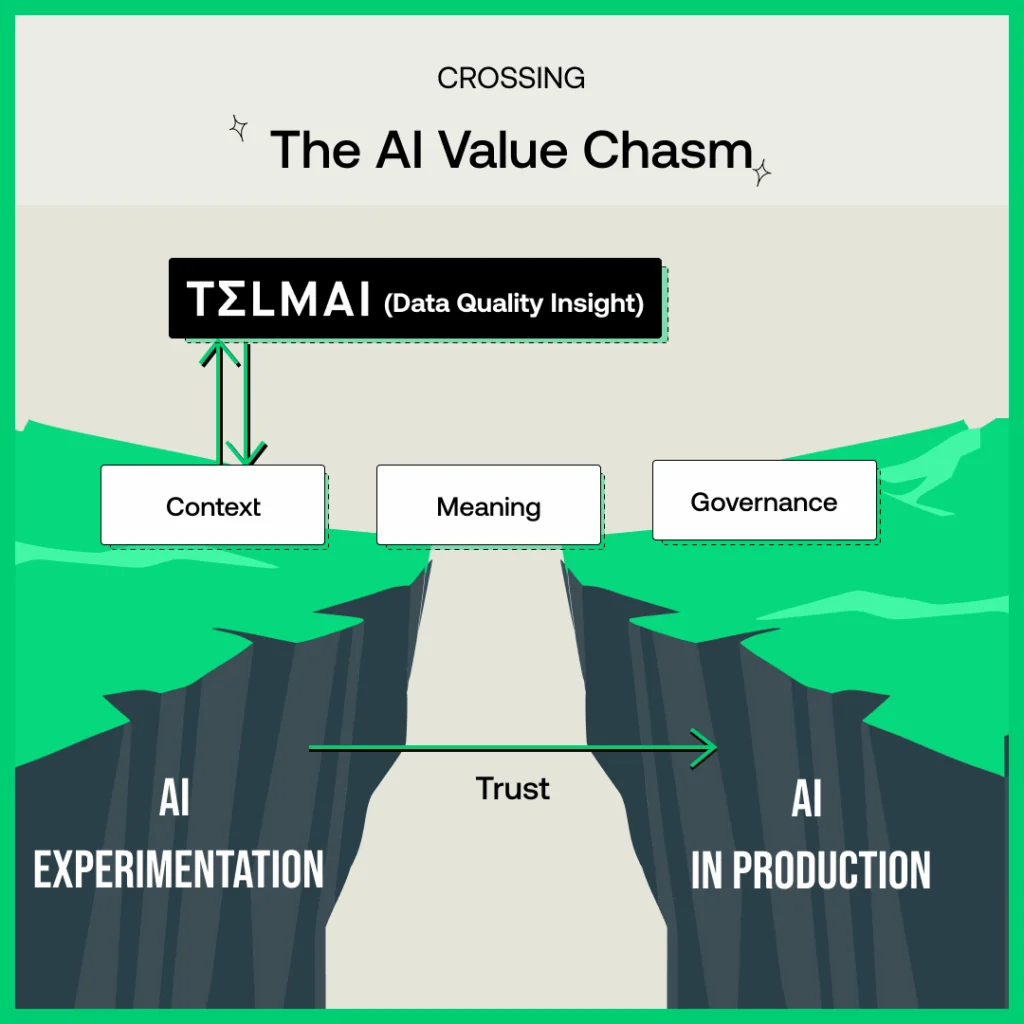
With a surge in AI investment, enterprise leaders are under mounting pressure to deliver reliable, scalable AI solutions that create measurable business impact. A recent MIT study found that 95  percent of generative AI projects failed to produce measurable outcomes, as many organizations struggle to move beyond experimentation and into reliable execution. AI pilots are failing to deliver, not because the models don’t work, but because the underlying foundational data systems upon which they are built lack reliability and context.

Autonomous systems and AI agents act on data in microseconds, so there’s no time for late-stage downstream fixes where most companies focus their data quality efforts today. To power AI-native ecosystems at scale, organizations must build trust at the source as data is ingested and ensure that data quality metadata is pushed to data catalogs and metadata systems, allowing agents to evaluate fitness before consumption. This creates the trusted foundation that Autonomous AI products need to operate reliably and at scale.

image
Image source – The AI Value Chasm

By combining Telmai’s AI-first data quality platform with Atlan’s AI-native metadata and governance platform through Atlan’s App Framework, enterprises gain a seamless way to detect, resolve, and govern data issues directly within the tools their teams already use.

In this article, let’s dive deeper into how they together create a single fabric of trust + context that allows enterprises to move beyond pilots and scale AI responsibly.

Why is real-time validation at ingestion critical for reliable AI?

The failure point for most AI initiatives isn’t in the model, but rather it’s in the underlying data pipeline feeding it. Business Intelligence (BI) is inherently deterministic and descriptive, working with structured historical data to explain what happened through predefined reports and dashboards. AI, in contrast, is non-deterministic and predictive. It consumes both structured and unstructured data to learn patterns, forecast outcomes, and make autonomous decisions.

The old adage “garbage in, garbage out” takes on far higher stakes here. AI and LLMs always identify patterns from the inputs they receive and derive insights without context or judgment. If those inputs are incomplete, drifting, or biased, the model confidently reproduces those flaws at scale.
Traditional data quality approaches were designed for a reporting world, where errors could be corrected after a dashboard broke or a KPI looked suspicious. AI-native workloads break this model entirely. AI and autonomous systems operate at machine speed, where thousands of micro-decisions are made every second. Waiting until the BI or monitoring layer to enforce quality is simply too late, as the damage has already propagated through to downstream business-critical applications.

That’s why ingestion-layer validation has become non-negotiable. Data quality must be ensured before Agentic workflows can access or read the data, not after the data lands in the access layer, at the data lake, or before it enters the lake through event streams. Reliability must be enforced as data is ingested into the lake, especially in open formats like Apache Iceberg and Delta Lake, where it is profiled and validated before being published to production tables.

image

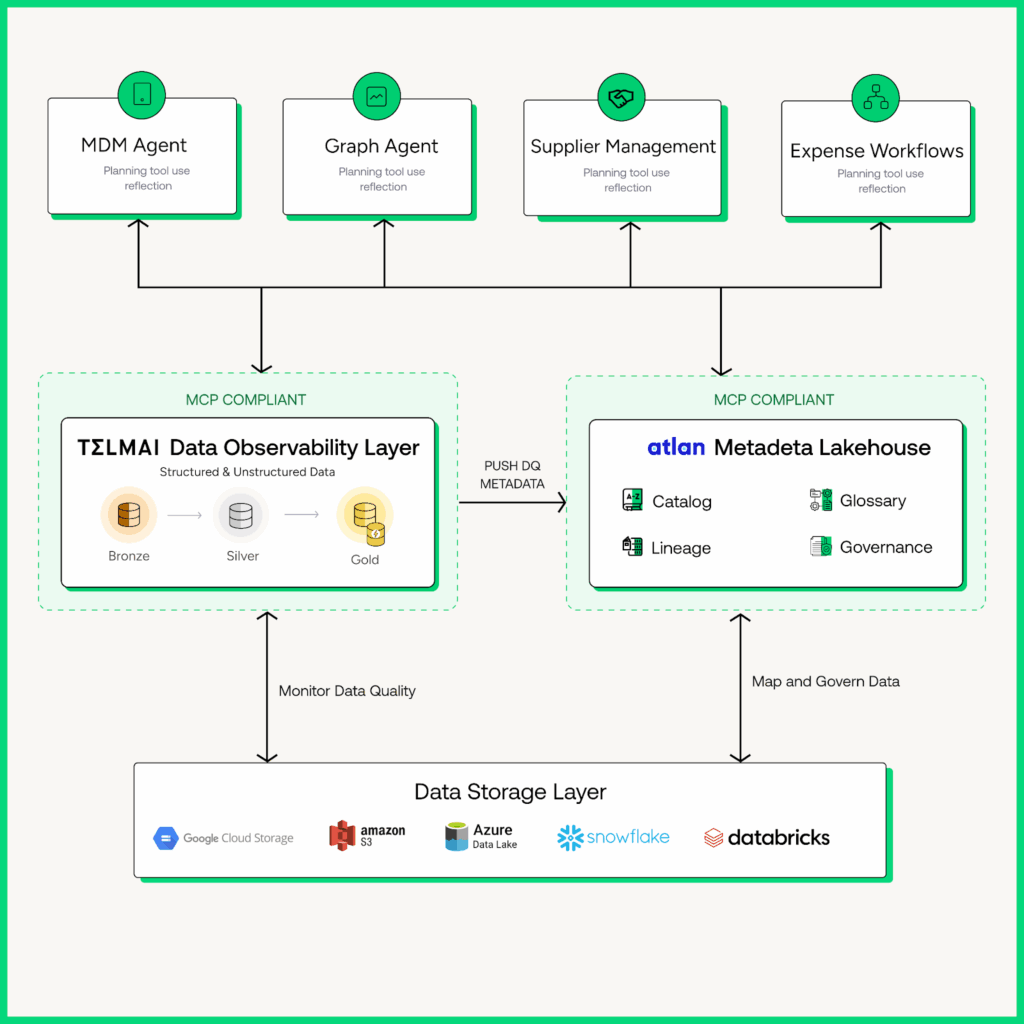
This is exactly where Telmai comes in. Purpose-built for AI-first architectures, Telmai continuously monitors and validates data through your data pipeline, irrespective of volume or velocity. Telmai’s ML-driven and rule-based checks automatically detect anomalies, schema changes, and data drift before they impact production. Further, Telmai can publish data health KPIs into data catalogs and metadata systems like Atlan, enriching lineage and governance with real-time data quality context.

Agentic AI systems don’t have the luxury of waiting for late-stage fixes. They act in microseconds. That means trust must be built into data at ingestion, and that trust must travel with context across the enterprise, “ said Mona Rakibe, Co-Founder and CEO of Telmai. “With the App Framework, Telmai and Atlan will give teams a trusted data layer ready to power applications and integrations that let AI move beyond pilots and deliver at scale.”

How Atlan extends this trust with context

Trust in data is only half the story. For enterprises to scale AI responsibly, trust must travel with context so every consumer, whether human, system, or AI agent, knows what the data means, where it came from, and how it can be used.

As part of Atlan’s new App Framework, Telmai is now integrated directly into Atlan’s Metadata Lakehouse. For the first time, enterprises can unify monitoring within the same foundation that powers column-level lineage, business-ready data products, AI governance, and policy & compliance monitoring.

With this integration, customers using Telmai and Atlan can:

  • Unify trust and context in the Metadata Lakehouse – Telmai’s data quality signals, such as freshness, anomaly detection, schema changes, and volume drift, are automatically surfaced inside Atlan, enhancing lineage and metadata with actionable insights that empower data consumers and AI agents alike.
  • Enable true interoperability for agentic AI – For agentic systems to truly scale, interoperability is critical. The tools and services that agents depend on,  whether for validation, access, enrichment, or downstream action, must be accessible through a common layer. Atlan delivers this through its open Metadata Lakehouse by providing consistent, versioned context across raw ingestion data and curated data products, ensuring data fitness can be evaluated at every step.
  • Enforce policy and compliance at scale – With Telmai’s data quality metadata embedded in the context layer, data trust signals can flow downstream via column-level lineage and bidirectional tag management to other platforms like Databricks, Snowflake, or data access systems. When Data Quality issues are encountered, they can trigger automated governance workflows, ensuring policy compliance and reducing risk across autonomous AI pipelines.

Enterprises can’t scale AI responsibly without a foundation of trust and context. Telmai brings real-time, ingestion-level validation, and Atlan serves as the context layer, ensuring that trust travels with context across every system, workflow, and AI agent.” said Marc Seifer, Head of Global Alliances at Atlan. “Together, Telmai and Atlan are enabling organizations to move beyond pilots and build AI systems that operate reliably, responsibly, and at scale.”

Get AI-Ready—Now

For enterprises to successfully transition AI pilots into production, they need real-time, low-latency access to validated data, along with metadata that carries context about its health, lineage, and governance. Without this foundation, AI agents operate blindly, lacking visibility into whether the data they consume is fit for use, where it originated, or whether they are authorized to access it.

Telmai and Atlan close this gap. Telmai continuously monitors and validates data in open table formats, such as Apache Iceberg and more, as it lands in the lake layer, detecting anomalies and data quality issues before they propagate downstream. It then generates rich observability metadata, which flows into Atlan’s Metadata Lakehouse. There, these signals are combined with lineage, policies, and business glossaries, providing a complete picture of data health and context for both humans and AI agents.

By bringing Telmai’s data quality signals into Atlan’s Metadata Lakehouse, enterprises can now drive measurable impact on their AI implementation with reliability and context fabric that enables AI to scale responsibly.
Want to learn how Telmai and Atlan can work together to scale your existing data infrastructure to be AI-ready? Click here to connect with our team for a personalized demo.

Want to stay ahead on best practices and product insights? Click here to subscribe to our newsletter for expert guidance on building reliable, AI-ready data pipelines.

GreenShift secures €2.35M in round by 4impact capital, The Footprint Firm and Rockstart

4Impact

GreenShift, an Amsterdam-based AI powered technology company revolutionizing sustainable cloud computing, has raised €2.35 million in a Convertible Loan Agreement (CLA) round. The investment was led by 4impact capital and The Footprint Firm with continued support from Rockstart.

The fresh capital will enable team growth and support GreenShift’s efforts to deepen enterprise partnerships, advancing its mission to become the operating system for sustainable cloud computing.

Tackling the urgent challenge of cloud emissions

The global cloud market is valued at over €900 billion and growing at a 21% CAGR. With cloud computing already generating more CO₂ emissions than the aviation industry, data centers are projected to account for up to 2.5 billion tons of CO₂ by 2030, nearly 40% of U.S. annual emissions. Today, cloud computing is estimated to account for roughly 2.5–3.7% of global greenhouse gas emissions. A significant share of this footprint is amplified by inefficiencies, such as idle provisioning, complex application deployment architectures that prevent easy cost and emissions attribution, and under-optimised application logic that reduce overall energy use effectiveness. This represents both a massive sustainability challenge and a strategic opportunity: without intervention, cloud and AI workloads will continue to drive unsustainable energy demand.

GreenShift’s solution: Full-stack visibility, real-time optimisation and carbon aware automation

Unlike existing solutions, many of which focus on infrastructure-level optimisation, GreenShift operates at the application layer, where most inefficiencies originate. GreenShift’s AI-powered platform reduces cloud application energy usage by up to 40%. By unifying cost, performance, and carbon into a single optimization engine, it enables organizations to lower emissions and significantly cut cloud costs while driving performance. Unlike traditional optimization initiatives that force a trade-off between cost and performance, GreenShift removes that compromise as well. The result is a step-change in cloud sustainability: lower costs, higher performance, and significantly reduced environmental impact.

Strategic investors supporting GreenShift’s growth

Omar Regoort and Leonid Borodaev, Co-CEOs of GreenShift, stated:

“Our vision is to lead the global shift to sustainable cloud computing. By building the operating system for sustainable cloud, we ensure digital growth is efficient, high-performing, and green by default. With 4impact, The Footprint Firm, and Rockstart as partners, we’re in a strong position to accelerate adoption and scale our impact globally.”

Ali Najafbagy, Founding Partner at 4impact capital, said:

“The rapid increase in cloud computing leads to vast inefficiencies, high energy consumption and high emissions. GreenShift tackles this head-on with a scalable, software-first solution that reduces energy use while enhancing performance. Omar, Leonid, and their team are uniquely positioned to build the global category leader in sustainable cloud computing, and we are proud to lead this round.”

Sofie Käll, CIO at The Footprint Firm, commented:

“We are excited to back GreenShift in addressing the critical and growing issue of costly, and emissions-heavy computing. Their solution delivers a powerful alignment of operational, economic and environmental value for Enterprises – exactly what’s needed to make sustainable technology truly scale. We’re betting on a future where AI serves, rather than strains, the planet, and we truly believe Omar and Leonid of Greenshift are the ones to help realize that vision”

Gem Kua, Investment Manager at Rockstart, added:

“Backing Omar and Leonid in GreenShift’s stealth phase was about more than investing in technology – it was about backing founders who could tackle the AI era’s compute and emissions challenge. Their early deployments have already demonstrated strong results across sustainability, cost, and performance metrics, and we’re proud to back them again as they are on track to lead the sustainable cloud computing category.”

The GreenShift investment benefits from support from the European Union under the InvestEU Fund.

Onapsis Partners with Microsoft to Boost Enterprise Defense with End-to-End SAP Security Monitoring

.406 Ventures

Onapsis Defend integration with Microsoft Sentinel Solution for SAP helps Security Operations teams strengthen SAP threat detection and response


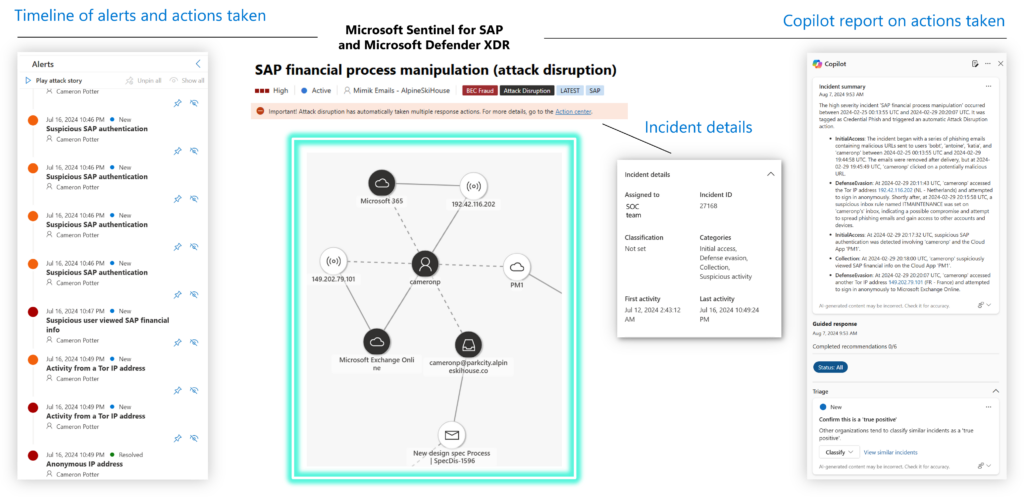
BOSTON, MA., September 30, 2025 – Onapsis, a global leader in SAP cybersecurity and compliance, today announced the launch of a new integration between its flagship Onapsis Defend threat monitoring product and Microsoft Sentinel Solution for SAP, based on Microsoft’s AI-powered cloud-native Security Information and Event Management (SIEM) platform. The integration provides security operations centers (SOC) with unified visibility and threat detection and response capabilities for SAP security events.

SOC teams struggle with a profound visibility gap into activity happening in their mission-critical SAP landscapes, which commonly serve as foundational systems of record for enterprises. This gap includes identifying SAP threats, detecting SAP-targeted exploits and zero-day activity, suspicious user or insider behavior, sensitive data downloads, security control violations and more. The new integration provides organizations with a superior early warning system with proprietary exploit detection rules for business-critical SAP applications, enabling their security teams to detect exploit attacks on vulnerable SAP systems before patches are even released.

“The collaboration extends the power of Onapsis’ SAP-endorsed, industry-leading threat monitoring directly into Microsoft Sentinel Solution for SAP,” said Sadik Al-Abdulla, Onapsis Chief Product Officer. “By unifying Onapsis’ context-rich insights with Microsoft Sentinel’s Solution for SAP, enterprises can investigate and respond to SAP threats faster, meet strict disclosure requirements with confidence and strengthen their security posture across both on-prem, cloud and RISE with SAP environments.”

Key benefits of the integration include:

  • Specialized Exploit and Zero-Day Detection: The Microsoft Sentinel Solution for SAP offers advanced pre-patch exploit protection and early warning alerts against cyberattacks, enriched with threat intelligence from Onapsis Research Labs and their Global SAP Threat Intelligence Network. This collaboration enhances Microsoft Sentinel’s native SAP capabilities with specialized insights from one of the industry’s most trusted research teams.
  • Context-Rich Alerts, Designed for the SOC: SAP events are uniquely enriched with detailed explanations, mitigation guidance, and anomaly scoring from the SAP cybersecurity experts at the Onapsis Research Labs to accelerate investigations
  • AI-Powered Security Insights: The powerful Microsoft Sentinel Solution for SAP and Microsoft Security Copilot AI capabilities, combined with the security insights and threat intelligence from Onapsis, offer superior identification of sophisticated attacks affecting your SAP and broader environment.
  • Unified Security Operations: With market-leading SAP threat and exploit detection from Onapsis, organizations can push security events to Microsoft Sentinel Solution for SAP for correlation with broader enterprise events to streamline incident handling and reduce response times through a unified view of the overall threat landscape in the Microsoft Unified SecOps Platform.

“Microsoft takes a holistic approach to SAP security, moving beyond isolated conversations. By integrating threat intelligence across the enterprise, and Security Copilot into Microsoft Defender Portal, we demonstrate that security isn’t limited to SAP Applications or data – it is about the whole ecosystem,” said Martin Pankraz, Product Manager, SAP Security, Microsoft. “Onapsis complements that effort with their market-leading pre-breach capabilities such as SAP exploit and zero-day detection, SAP Vulnerability Management or ABAP Code Security. We’re delivering deeper protection for our customers’ SAP landscapes, empowering them to respond to SAP threats faster and keeping them far ahead of the latest SAP attacks and exploitation techniques from malicious threat actors.”

It has been a watershed year for defenders marked by a series of high-profile SAP vulnerabilities, zero-days and global attack campaigns that led to hundreds of enterprises being compromised. Despite SAP’s rapid patching, security practitioners are still faced with the ongoing challenge of protecting their business-critical applications in a sophisticated threat landscape. Considering the notable success of well-funded threat actor groups targeting SAP applications, directly combined with significantly stricter regulatory requirements under EU NIS2 and SEC rules in the US, and the looming deadline for migration to SAP S/4HANA through RISE with SAP, organizations find themselves under unprecedented pressure to better secure their SAP landscapes. The Onapsis integration with Microsoft Sentinel Solution for SAP directly addresses these challenges by giving SOC teams the visibility and control needed to rapidly respond to an increasing number of threats to critical SAP systems.

Availability

The Onapsis Defend for Microsoft Sentinel Solution for SAP integration is available today. Pricing and further details available through Onapsis sales representatives or authorized systems integrators. For more information, please visit the Microsoft Azure Marketplace.

About Onapsis

Onapsis is the global leader in SAP cybersecurity and compliance, trusted by the world’s leading organizations to securely accelerate their SAP cloud digital transformations with confidence. As the SAP-endorsed and most widely used solution to protect SAP, the Onapsis Platform empowers Cybersecurity and SAP teams with automated compliance, vulnerability management, threat detection, and secure development for their RISE with SAP, S/4HANA Cloud and hybrid SAP applications. Powered by threat insights from the Onapsis Research Labs, the world’s leading SAP cybersecurity experts, Onapsis provides unparalleled protection, ease of use, and rapid time to value, empowering SAP customers to innovate faster and securely. Connect with Onapsis on LinkedInX, or visit https://www.onapsis.com.

Categories: News

Tags:

BeSound: Diagnosing Masses for the Masses

Kindred Ventures

Our Investment in BeSound

Breast cancer screening is broken. Mammograms, invented in the 1950s, remain the dominant tool despite their limitations. They miss 40% of breast cancers in women with dense breast tissue. The process itself is slow and fragmented: book a doctor’s appointment, wait weeks, undergo a manual exam, then a screening image, then a diagnostic image. For many women, this means weeks of anxiety while answers remain out of reach. The FDA recently updated its guidelines requiring providers to notify women with dense breasts that mammograms may not be enough, sending 40 million women a letter that underscores the shortcomings of today’s system.

BeSound is building an alternative: AI-powered ultrasound that collapses weeks of steps into a single visit. By pairing FDA-approved photo-acoustic ultrasound machines with proprietary AI, BeSound delivers precise functional imaging tailored to each woman’s biology. Unlike mammograms, BeSound delivers answers in hours and has been shown in real-world studies to reduce unnecessary biopsies by up to 75%.

That vision is why we’re excited be co-leading BeSound’s $6.76 million seed alongside Overwater Ventures, Muse Capital, and Lux Capital.

Why We Invested

After an hour with Bailey Renger, we were immediately struck by her unusual background. Her technical expertise, knack for brand, and intuition for the changing shape of healthcare present a rare triple threat. Bailey began her career in science, working in an optics lab, at NASA, and at Harvard in quantum computing before starting a PhD in physics at Brown. But during that time, she faced a medical crisis: “I always wanted to be a physics professor… but when I started experiencing severe pain, my doctors told me it was just cramps. I pushed for an ultrasound, and they found a tumor in my ovary. Then I had to wait months for an MRI. That gap in care was the catalyst for me leaving my PhD to start this company.”

Her story underscores why she is so close to the problem. With one in eight women expected to face breast cancer, Bailey’s blend of scientific training and lived urgency gives BeSound a rare edge. The company is positioned to deliver fast, accurate, and scalable diagnostics—offering hope to millions.

Looking Ahead

BeSound is launching first in Los Angeles with its inaugural West Hollywood location, where women can book same day appointments starting at $349. The company is expanding rapidly, including New York in the coming months, bringing FDA approved technology, hospital grade precision, and expert reviewed results within 24 hours.

In the near future, breast cancer screening will shift from decades-old, one size fits all mammograms to AI-powered functional imaging that adapts to each woman’s biology. The future isn’t just about finding cancers earlier, it’s about giving women fast, precise answers, and building an experience that puts them at the center of care.

Join the waitlist at BeSound.

Categories: News

Tags: