Emerald Welcomes Back Cédric Mutz as Partner and Head of Portfolio Performance

Emerald

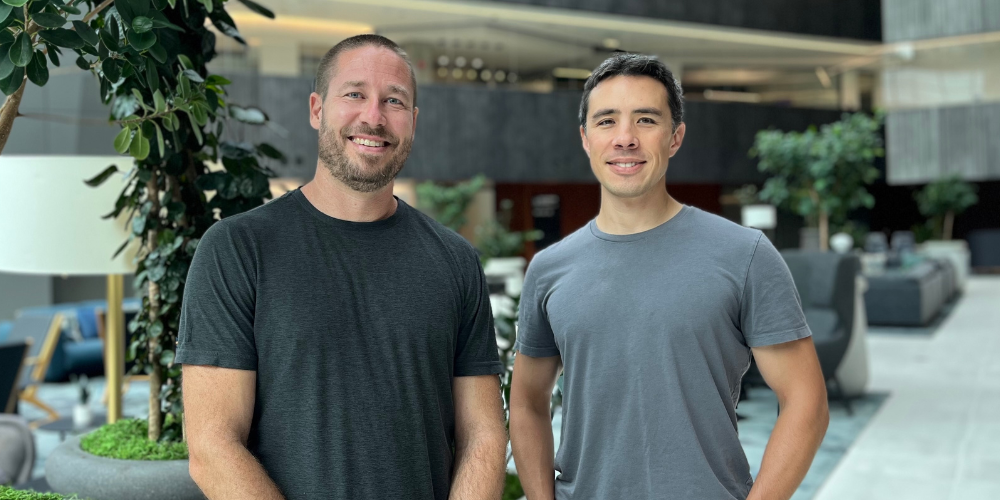
Zurich, Switzerland – Emerald Technology Ventures, a global leader in climate-tech venture capital, has announced the appointment of Cédric Mutz as Partner and Head of Portfolio Performance, marking his return to the firm at a pivotal stage in its growth.

Cédric is a seasoned professional with extensive experience in venture capital, corporate finance, and entrepreneurship. Having previously worked at Emerald early in his career, he rejoins the firm after holding senior positions in industry and M&A advisory.

In his new role, Cédric will be responsible for overseeing portfolio performance across Emerald’s funds, supporting founders and management teams. His appointment comes as Emerald has surpassed €1 billion in assets under management and advisory and expanded its suite of funds targeting climate technologies.

“Returning to Emerald feels both natural and energizing,” said Cédric Mutz. “The firm is at an exciting inflection point, with new funds, new mandates, and a growing international footprint. I look forward to helping our portfolio companies scale their impact while delivering strong performance for our investors.”

Emerald Managing Partner Gina Domanig welcomed the appointment, stating:

“We are delighted to have Cédric back at Emerald. He brings a unique combination of investment expertise, operational know-how, and international perspective. His leadership will be instrumental in ensuring the success of our portfolio companies and accelerating the commercialization of sustainable industrial innovation.”

Cédric’s appointment reinforces Emerald’s commitment to driving portfolio success through senior leadership. The enhanced management team also reflects Emerald’s rapid growth and its leading position in the expanding climate tech sector. With this team expansion, Emerald continues to evolve, staying well positioned as a trusted partner for corporates and startups worldwide.


Find out more about Emerald’s growth:

25 Years of Emerald: A Journey of Grit, Trust and Growth

Veralto Commits €20M to Emerald’s New Fund to Accelerate Water Innovation Solutions

How to Pick Winners for a Climate Tech Portfolio

About Emerald Technology Ventures

Emerald is a globally recognized venture capital firm, founded in 2000, that manages and advises assets of over €1 billion from its offices in Zurich, Toronto and Singapore. The firm invests in start-ups that tackle big challenges in climate change and sustainability, with four current funds, hundreds of venture transactions and five third-party investment mandates, including loan guarantees to over 100 start-ups.

This is Emerald.

Bold Ideas. Bright Future.  www.emerald.vc

CONTACT FOR EMERALD:

info@emerald.vc

Categories: People

Tags:

EQT Life Sciences portfolio company VarmX partners with CSL in a strategic collaboration and option agreement worth up to USD 2.2 billion

EQT Life Science
  • VarmX is developing a bypass agent to restore coagulation for patients facing life-threatening bleeding or requiring emergency surgery while on anticoagulants that target Factor Xa
  • Under the agreement, CSL will fully fund clinical development of VMX-C001 and pay VarmX shareholders USD 117 million upfront for an exclusive option to acquire VarmX, in a transaction worth up to USD 2.2 billion
  • EQT Life Sciences has backed VarmX since 2020, actively supporting the Company at board level as it successfully completed a first-in-human clinical study and obtained FDA clearance to start a global registrational Phase 3 trial

EQT Life Sciences, a leading European life sciences venture capital firm, is pleased to share that CSL has entered into a strategic collaboration with its portfolio company VarmX to support the development of its lead asset, VMX-C001. CSL has also entered into an exclusive option agreement with VarmX shareholders to acquire all issued and outstanding shares of the company in a transaction worth up to USD 2.2 billion.

VarmX, based in Leiden, the Netherlands, is a biotech company developing innovative approaches for the bypass of direct oral anticoagulants targeting activated Factor Xa (FXa DOACs) and inherited coagulation disorders. More than 20 million patients globally take FXa inhibitors as chronic anticoagulation therapy, with approximately 3 per cent of these patients experiencing severe bleeding or requiring urgent surgery. Despite the unmet clinical need, no fully approved therapeutic agent is currently available in the E.U. or the U.S. for treating acute major bleeding in patients on Factor Xa inhibitors.

VMX-C001 is an investigational product, designed to bypass the FXa anticoagulation activity and swiftly restore coagulation in patients in urgent surgery and severe bleeding situations. Under the terms of the strategic collaboration agreement, CSL will fully fund VarmX’s global Phase 3 trial evaluating VMX-C001. CSL will also fully fund and support VarmX in late-stage product development, manufacturing and pre-launch commercial and medical affairs activities.

EQT Life Sciences originally invested in VarmX in 2020, co-leading the company’s Series B financing, investing from its LSP 6 fund. At the time, VMX-C001 was still in preclinical stages but with EQT’s support, the company successfully completed a first-in-human clinical study and recently obtained FDA clearance for its Investigational New Drug (IND) application to start a global registrational Phase 3 trial with VMX-C001.

John de Koning, board member at VarmX and Partner at EQT, added: “We are very proud to see that VarmX is, together with CSL, advancing its truly game-changing approach for this large unmet need in the emergency care setting. FDA’s recent granting of Fast Track Designation for VMX-C001 aims to shorten the time to market, further recognizing the company’s unique opportunity as well as the promise for patients.”

John Glasspool, Chief Executive Officer of VarmX, said: “The collaboration with CSL represents a transformative step for VarmX. By securing full funding for the registrational trial, product development, CMC and pre-launch activities, we are well positioned to bring VMX-C001 to patients. We are proud to partner with CSL, whose expertise and global reach will be invaluable as we move forward.”

Dr. Paul McKenzie, Chief Executive Officer of CSL, commented: “We are excited to partner with VarmX to develop a novel treatment and address a significant unmet need aligning strongly with our strategic ambition to deliver enduring patient impact. It also aligns with our portfolio of medicines designed to minimize bleeding, preserve a patient’s own blood supply, improve surgical and medical outcomes and support global public health approaches to patient blood management.”

CSL will make an upfront payment to VarmX shareholders of USD 117 million upon closing of the transaction for an exclusive option to acquire the company. CSL will have the right to exercise the option upon Phase 3 data. Subject to the achievement of certain milestones, following the exercise of the option and customary regulatory clearances, VarmX shareholders will receive a further USD 388 million in acquisition and additional payments up to the commercial launch of VMX-C001 and up to USD 1.7 billion in sales-based success milestones thereafter.

Contact
EQT Press Office, press@eqtpartners.com

Downloads

Categories: News

Tags:

The Era of Generative Genomics with Synthesize Bio

Madrona

We’re entering a new era of life sciences, one marked by unprecedented speed of innovation and, paradoxically, slowing scientific progress. Drug discovery is becoming harder and more costly, not easier. Despite incredible technological advances, it now takes more time and more money to develop life-saving medicines than ever before.

This phenomenon has been wryly dubbed Eroom’s Law (Moore’s Law backwards). A nod to the fact that drug R&D productivity is moving in the opposite direction of the exponential advances we’ve seen in semiconductors and software. At Madrona, we believe this slowdown is unacceptable and not inevitable.
That’s why we’re thrilled to announce our investment in Synthesize Bio, founded by Rob Bradley, McIlwain Family Endowed Chair and Director of the Translational Data Science Integrated Research Center and Jeff Leek, J Orin Edson Foundation Endowed Chair and Chief Data Officer at Fred Hutchinson Cancer Center.

Rob and Jeff are world-leading researchers who have built their careers understanding biology from massive RNA datasets. They founded Synthesize Bio to build foundation models to solve the problems they face in their own research – understanding complex biology to deliver new insights that enable novel medicines in a highly competitive and resource-constrained environment.

Generative Genomics – A Foundation for the Future of Science

While biology hasn’t had its “ChatGPT moment” yet, we’re getting close. Rob and Jeff saw the massive potential while hacking diffusion models on their nights and weekends, inspiring them to found Synthesize Bio.

They came to us with the idea that in the future, most genomic data would be generated by models instead of in a lab. They called this idea “generative genomics” and showed us the first prototype of their idea. Over the past year, they have been quietly building, training a generative genomics foundation model (GEM-1) on the largest, most deeply curated RNA-seq dataset ever assembled. Their recent preprint demonstrates best-in-class performance: generating in silico data that matches wet-lab experiments – simply from experimental designs.

RNA-seq is the gold standard for linking genotype to phenotype at scale, capturing the transcriptional dynamics that translate static DNA into the active processes driving health and disease. RNA provides a uniquely rich substrate for generative modeling, leveraging high-throughput sequencing and massive datasets. For the first time, we’re starting to see scaling laws emerge in biology and with them, the possibility of generative tools becoming foundational infrastructure for scientific research.

While this is just the first release of the GEM models from Synthesize, they are already seeing super-experimental (analogous to super-human) performance – AI models that outperform novel lab experiments at reproducing biological signals.

It’s time to revisit the old adage, “An hour in the library can save a month in the lab.” Synthesize Bio reinvents that hour in the library; no longer are scientists limited to what others have published. Generative genomics moves reasoning agents from just searching published literature to enabling dynamic AI experiments that accelerate research by years, not months.

From Bottlenecks to Breakthroughs: Scientists Need to Do More with Less

Biology is hard. Scientists spend years and pharmaceutical companies spend millions narrowing down hypotheses, only to find themselves limited by what can be physically tested in patients or animals or what can be gleaned from early efficacy signals in Phase I clinical trial data. Can you get the patient samples needed? Do you have the statistical power to predict which patients are likely to respond to treatment? These constraints no longer need to define the limits of discovery or drug development.

Synthesize Bio is building a future where early-stage clinical data can be augmented with AI-generated datasets, providing better predictive power to de-risk costly trials and bring needed medicines to patients sooner. On top of the generative genomics foundation model, scientists can build applications solving the critical research challenges limiting scientific progress.

  • Hypotheses that were once infeasible due to cost or time can now be evaluated in silico
  • Human-relevant models bridge the gap between cells in a dish and real biology in people
  • Clinical study designs can be modeled computationally offering a preview of outcomes before the first patient is even enrolled
  • Generating biomarker data creates insight from impossible to collect biopsies
  • Biomarker hypotheses can be tested with robust statistical power before Phase III trials

This is the power of generative genomics: unlocking scale, speed, and scope that wet lab experiments or early clinical trial data alone simply can’t match.

The Scientist of the Future Will Spend 90% of Their Time at the Keyboard

The tech shift in biology is already underway. The success of generative protein design, AI-driven structure prediction, and automated screening tools is showing what’s possible. These tools, while powerful, all act on known biology and targets. To drive the future of life sciences, we need to discover new biology faster and more efficiently. We need tools to better de-risk clinical development before years are wasted on the wrong assets. Into this need steps Synthesize Bio and generative genomics.

The next generation of biotech breakthroughs will be built by scientists and drug development companies who are fully tech enabled, running experiments in code, iterating rapidly, and validating only the best ideas in the lab. But this future requires infrastructure. Unlike large language foundation models, life science research demands deep domain expertise, vertical-specific and highly curated training data, and integration with life science workflows. This isn’t a space for one-size-fits-all solutions. Synthesize Bio has built the foundation to drive the future of in silico-first, life science research.

Democratizing Discovery: From Insights to Impact

While no model will ever perfectly recapitulate all of biology, Synthesize’s represents a profound shift, empowering scientists to do more, faster, with greater confidence. And this is beyond just efficiency, it’s about enabling new and better science.

The Synthesize Bio team is developing partnerships with biopharma teams to accelerate drug development using their foundation models. Access to the GEM-1 foundation models is now available at Synthesize.bio and through R and Python API clients.

We are proud to back Rob, Jeff, and the Synthesize Bio team as they build this foundational layer for modern biotech. At Madrona, we’re investing from day one in the companies creating the future of life science R&D where scaling laws apply to biology, discovery accelerates, and new medicines reach patients faster.

If you’re building at this intersection—or want to—let’s talk.

Arch Raises $52M Series B to Modernize Private Markets Infrastructure

Oak HC FT

Arch, the digital way to track all private market investments, today announced it has raised $52 million in Series B funding. The round was led by Oak HC/FT, with participation from Menlo Ventures, Craft Ventures, Quiet Capital and others. The funding will support Arch’s ongoing expansion and development, with a particular focus on meeting the needs of institutional investors, large private wealth teams and established family offices.

In an era of rapid technological advancement, private markets have emerged as the most dynamic arena in global finance. The global alternatives market is projected to reach $29.2 trillion by 2029, up from $16.8 trillion in 2023. Despite this growth and increasing investor interest, private market infrastructure is plagued by antiquated processes and massive information asymmetry. Investors must navigate hundreds of portals and thousands of emails, with little visibility or automation. In private markets, where illiquidity is inherent, the value of leverage and efficient cash management is even more pronounced. As regulatory pressure and client expectations rise, the need for real-time data, streamlined workflows and robust reporting capabilities has never been more critical.

Arch is the AI-powered operating system purpose-built to eliminate the operational friction of private investing. It automatically collects and structures financial data from documents, including K-1s and statements, from various portals and emails into one secure place. New features like Arch Pay automate capital calls, making nearly every stage of alternative investing more seamless. By simplifying document collection and data extraction, Arch reduces manual administrative tasks and enhances portfolio visibility. For allocators managing complex alts exposure, Arch serves as a single source of truth, giving investors the clarity and confidence to unlock the full value of their alts business.

“Investors in private markets have long been underserved – dealing with fragmented data, clunky workflows and high fees,” said Ryan Eisenman, Co-Founder and CEO of Arch. “With this new capital and the support of our partners, we’re expanding our suite of CIO tools, developing new features within our client portal and enhancing reporting capabilities for LPs. We’re continuing to build the product the industry needs – streamlining analysis, centralizing reporting and eliminating manual back-office work tied to alternative investments.”

Over the last 14 months, Arch has grown from $100 billion to over $250 billion in private market assets on the platform. More than 50% of Arch’s users have referred the platform to another client, reflecting the company’s strong Realized Net Promoter Score (rNPS). Arch’s key differentiator is winning and retaining the most complex clients of the firms it serves, which has fueled its expansion beyond family offices and RIAs to now serve over 450 allocators globally, including more than 100 new clients year-to-date. This growth includes four of the top private banks, seven out of the top 25 accounting firms, and some of the world’s largest private wealth and institutional investment firms. All rely on Arch as their data management platform for all things alternatives.

“In our diligence calls, Arch clearly stood out. We have LPs that use lots of solutions, but Arch clients showed a clear enthusiasm for the product and team that was lacking across any peer solutions. That, paired with their rollout across one of the nation’s biggest banks, their traction in the institutional space, and the hundreds of family offices and RIAs that use the platform gave our team deep conviction in Arch — now and in the future,” said Matt Streisfeld, General Partner at Oak HC/FT.

To learn more about partnering with Arch, or to receive a demonstration of the platform, please email hello@arch.co.

About Arch

Arch is the first Alternatives Management Platform, streamlining the entire lifecycle of alternative investing — from logging into portals and collecting K-1s to automating capital calls and delivering real-time reporting. With Arch, investors gain on-demand reporting, real-time insights and visibility across their private equity, venture capital, hedge funds, real estate and other private investments. Arch supports $250 billion in private assets across 450 leading allocators, including 150 single family offices, 100 RIAs and multi-family offices, four of the top 20 global banks, seven of the top 20 accounting firms, as well as prominent fund administrators, law firms, and institutions.

To learn more or request a demo, visit arch.co/contact. Follow Arch on X (@gotk1s) or LinkedIn or visit us in our New York City headquarters for more information.

About Oak HC/FT

Oak HC/FT is a venture and growth equity firm specializing in investments in fintech and healthcare. Using partnership as a foundation, Oak HC/FT guides companies and founders at every stage, from seed to growth, to create businesses that make a measurable and lasting impact. Founded in 2014, Oak HC/FT has invested in more than 100 portfolio companies and has over $5.3 billion in assets under management. Oak HC/FT is headquartered in Stamford, CT, with an office in San Francisco, CA. Follow Oak HC/FT on LinkedIn and X and learn more at https://www.oakhcft.com/.

Categories: News

Tags:

Simon AI Launches Agentic Marketing Platform to Unlock Data for Contextual Personalization

.406 Ventures

Simon AI acts as a marketer’s data and execution team, uncovering hidden signals, activating real-world context, and accelerating high-performing launches that elevate customer experiences


NEW YORK — Sept. 15, 2025 — Simon AI, formerly known as Simon Data, today announced the launch of the Simon AI™ Agentic Marketing Platform, to enable marketing teams at fast-growing and enterprise brands to break free from the limitations and trade-offs that hold back high-performing personalization. With Simon AI, marketers set business goals, then purpose-built agents turn live customer and contextual data into adaptive campaigns that deliver higher conversion, increase customer lifetime value, and drive measurable growth.

Personalization previously took weeks to months to execute. Now, Simon AI Agents identify signals and patterns, prepare data for execution, and automate high-volume micro-segmentation into engagement channels. As a result, marketing is now fast and nimble enough to activate customer moments, elevating both scale and performance.

“Agentic AI is changing how marketing gets done, representing the biggest shift since the move to SaaS and cloud computing,” said Jason Davis, co-founder and CEO of Simon AI. “Until now, marketers have faced a painful trade-off — launch more campaigns and watch performance drop, or push for deeper personalization and lose volume. With Simon AI, that trade-off ends.

“Agentic Marketing is a new model where embedded agents operate across the most complex workflows on an AI-first, composable CDP, accessing all customer and contextual data live in the data cloud. Simon AI Agents can reason over that data, enrich it, and execute at a scale that was previously impossible. Now, marketing teams can finally overcome the data and execution complexity that has held personalization back.”

Solving Data and Execution Complexity for Marketers

For most brands, personalization is still constrained by four challenges:

  • Data access: Marketers can’t get the right signals in time to act.
  • Execution bottlenecks: Campaigns take weeks to launch, making “real-time” and “continuous” impossible.
  • The missing context: First-party data leaves out signals like weather, inventory, and trends that drive customer decisions.
  • AI acceleration: Teams use surface-level AI tools for content generation and predictive analysis, yet struggle to apply AI to the most complex marketing problems that are blockers to insight and execution.

Together, these challenges prevent marketing teams from achieving true personalization — and they define why a new way of marketing and a new solution are needed.

The Simon AI Agentic Marketing Platform

Simon AI combines a goal-based workflow, agents that deliver insights and automate execution, and an AI-first composable CDP powered by best-in-class integrations. With unified customer and contextual data in a brand’s existing cloud data environment, real-world signals define audiences and trigger messaging, adaptive campaigns launch faster, and personalization executes with governance and control.

Simon AI Personalization Studio

The workspace where marketers turn strategy into performance. The Personalization Studio starts with goals, not static segments, and gives teams a guided environment to connect data to campaigns that adapt automatically to live signals. With it, marketers can:

  • Define business goals in plain language and turn them into data-driven campaigns.
  • Use Blueprints—reusable playbooks that translate goals into strategies and execution plans—to guide agents and launch thousands of micro-campaigns.
  • Continuously evolve campaigns with AI Fields and AI Moments. AI Fields create new attributes about customers or products, such as a “Cold-weather readiness score” or “Price sensitivity”. AI Moments detect and operationalize real-world triggers, such as a weather swing, social trend, or inventory change, that signal when to act.
  • Automate execution across every channel—engagement platforms, owned channels, and paid media—with campaigns that stay aligned to outcomes.

Simon AI Agents

The marketer’s data and execution team that builds personalization based on insights and customer moments. Agents handle the complexity of surfacing signals, preparing data, and activating campaigns so that marketers can focus on strategy, creative, and customers. With Simon AI Agents, marketers can:

  • Detect hidden signals such as churn risk, demand spikes, inventory changes, weather, and social trends.
  • Transform messy customer and contextual data into campaign-ready attributes.
  • Orchestrate workflows and activation across platforms like Braze, Attentive, Iterable, and more.

Simon AI Composable CDP

The data foundation and semantic layer that makes AI work. Running natively in your cloud, the composable CDP makes customer and contextual data actionable, enables high-volume personalization, and enriches the enterprise source of truth. With the AI-first CDP, marketing teams can:

  • Explore and activate all customer, business, and contextual signals.
  • Run personalization directly on live data with zero ETL pipelines.
  • Enrich data and write back new fields, segments, and results into the data cloud for enterprise use.
  • Maintain enterprise-grade governance and control inside the data warehouse.

What It Means for Customers

With Simon AI, brands accelerate differentiation and growth by launching campaigns frequently, acting on more signals, and scaling personalization without trade-offs. Early adopters have reported:

  • Rapid execution of contextually relevant campaigns.
  • Higher conversion rates driven by contextual signals and adaptive personalization.
  • Material revenue growth, powered by more campaigns in market at a greater speed.

The New Model: Agentic Marketing

AI is reshaping how brands engage customers. To compete, marketers must act on 100x more signals, make 100x more decisions, and run thousands of micro-campaigns. Simon AI introduces Agentic Marketing — a new model that removes bottlenecks, unlocks insights, and gives marketers direct control of fast, precise personalization:

  • AI-Powered Execution: Agents handle insights, data preparation, and orchestration as part of the marketing team. Campaigns adapt quickly to live customer and contextual data, scaling personalization without overhead.
  • Contextual Personalization with Real-World Signals: Marketers see customers in full context, connecting profiles and behavior to signals like inventory, weather, and trends. Marketing moves past assumptions and acts on what matters now.
  • Marketer-First, Goal-Based Workflows: Instead of starting with static segments, marketers define business goals. Agents turn those goals into personalized campaigns that launch faster and continuously optimize as new signals emerge.

Alongside the launch of the Simon AI Agentic Marketing Platform, the company has rebranded from Simon Data to Simon AI, reflecting its evolution into an AI-first company. The new name underscores the central role of agentic AI in enabling personalization and highlights the value of connecting data to execution through AI.

Visit simon.ai to learn more and connect with our team to see how Simon AI works.

About Simon AI

Simon AI empowers marketing teams with the data, tools, and support needed to deliver personalized experiences for each customer across every touchpoint. The platform combines an AI-first, composable customer data platform with AI agents, enabling marketers to start with a goal while agents analyze signals, create attributes, identify triggers, and orchestrate campaigns that continuously adapt to meet that goal. By uncovering hidden signals, activating 100x more customer and contextual data, and automating execution across engagement channels, Simon AI allows even small teams to perform like much larger ones. Leading brands such as ASOS, SeatGeek, and others rely on Simon to turn complex data into faster launches, personalized experiences at scale, and revenue-driving performance. Visit simon.ai to learn more.

GreenLite Raises $49.5M Series B to Advance the Privatization of Construction Permitting with AI-Powered Solutions

Insight Venture

Walgreens, O’Reilly Auto Parts, and TD Bank are among the Fortune 500 companies using GreenLite’s AI-driven Private Plan Review for permitting efficiency

NEW YORKSept. 15, 2025 /PRNewswire/ — GreenLite, the construction technology company accelerating permit timelines by 75% through AI-powered plan review and compliance solutions, today announced a Series B funding round of $49.5M, led by global software investor Insight Partners with participation from Energize Capital, as well as existing investors Craft Ventures, LiveOak Ventures, and Chicago Ventures. GreenLite will utilize the new capital to expand its go-to-market efforts and enter new verticals, including lodging, industrial and logistics, clean energy infrastructure, and residential development, while further advancing its AI-powered technology platform.

As demand for construction surges, jurisdictions and building departments face unprecedented challenges, including labor shortages, limited adoption of technology, and rising backlogs.

This strain is renewing focus on technologies and policies for permitting solutions, including Private Plan Review (PPR), where qualified third-party experts conduct official code compliance reviews instead of the city. Nearly a quarter of U.S. states have advanced legislation for PPR in the past three years, aiming to reduce delays and streamline development. Today, GreenLite is the only Private Provider combining regulatory expertise with AI to deliver PPR at a national scale.

“The permitting backlog is holding back America’s ability to build at the scale and speed we need,” said James Gallagher, Co-Founder and CEO of GreenLite. “By combining a growing database of proprietary compliance comments with advanced automation, we’re catching violations faster and providing builders, developers, and jurisdictions with the predictability and transparency they need to move projects forward, dramatically transforming the plan review and construction code compliance process.”

GreenLite’s AI-powered digital plan review tool, LiteTable, rapidly ingests plan sets, identifies compliance flags and code requirements, and surfaces relevant guidance from GreenLite’s extensive comment library based on compliance patterns within specific jurisdictions. Today, GreenLite is trusted by nearly a hundred Fortune 500 customers, including retailers, REITs, quick service restaurants, industrial owner-developers, and production home builders to advance permitting nationwide. The company is expanding into lodging, logistics, multifamily, and additional verticals this year.

“GreenLite’s full-stack Private Plan Review approach delivers building permits in days, not months, and is driving growth in America’s local communities and economies,” said Jeff Horing, Co-founder and Managing Director at Insight Partners. “We’re thrilled to back GreenLite as it continues to partner with the commercial sector and local governments to power the future of construction permitting.”

GreenLite was founded in 2022 by James Gallagher and Ben Allen, former Gopuff executives. The company has 50 full-time employees today, and is actively hiring across engineering, product, sales, marketing, operations, and executive roles.

To learn more about GreenLite’s AI-powered permitting and private plan review capabilities, please visit: https://greenlite.com/.

About GreenLite:
GreenLite is transforming how America builds by streamlining the permitting process for developers, builders, and local governments. GreenLite pioneered AI-powered Private Plan Review (PPR), where third-party experts, supported by proprietary software, conduct official code compliance reviews instead of cities.

Its technology accelerates approvals by scanning plan sets, identifying code violations, and surfacing jurisdiction-specific guidance from a large and growing proprietary database of compliance comments. With a team of in-house architects, engineers, and plan examiners, GreenLite helps customers reduce revisions, avoid delays, and cut weeks or months off their permitting timelines.

Trusted by nearly 100 national brands, GreenLite is reshaping the future of permitting across industries from retail and banking to logistics, lodging, and multifamily development. Learn more at https://www.greenlite.com.

About Insight Partners:
Insight Partners is a global software investor partnering with high-growth technology, software, and Internet startup and ScaleUp companies that are driving transformative change in their industries. As of June 30, 2025, the firm has over $90B in regulatory assets under management. Insight Partners has invested in more than 875 companies worldwide and has seen over 55 portfolio companies achieve an IPO. Headquartered in New York City, Insight has a global presence with leadership in London, Tel Aviv, and the Bay Area. Insight’s mission is to find, fund, and work successfully with visionary executives, providing them with tailored, hands-on software expertise along their growth journey, from their first investment to IPO. For more information on Insight and all its investments, visit insightpartners.com or follow us on X @insightpartners.

Penguin Ai Accelerates Agentic AI for Healthcare with Snowflake Ventures Investment

Snowflake

Across every industry, organizations are adopting AI to drive new efficiencies and improve decision-making. The healthcare industry is complex and highly regulated. Compliance with regulatory statutes is mandatory, given the myriad rules around protected health information (PHI). The first step on the AI journey is building a robust data foundation, governance and security framework. Solving this challenge requires a new approach that can navigate these intricacies and unlock true efficiency.

The healthcare industry also expects an outcomes-driven approach to AI. That’s why we are thrilled to announce that Snowflake Ventures is investing in industry-AI disruptors like Penguin Ai to deliver innovations purpose-built for healthcare.

Penguin Ai has built a full-service, enterprise-grade AI platform to empower healthcare organizations to embrace AI with confidence and drive measurable outcomes across both the payer and provider ecosystem.

Founded in 2024 by the former chief data officer at Kaiser Permanente, United Healthcare and Optum, Penguin Ai delivers powerful, compliant AI solutions that reimagine complex healthcare workflows. The platform offers pre-trained AI models and sophisticated AI-based Digital Workers and Agents that automate high-cost, high-volume and data-intensive tasks. These include critical back-office processes like: prior authorization, medical coding, and HCC risk coding.

With this investment, Penguin Ai will bring its agentic AI solutions to the Snowflake Marketplace through a series of Snowflake Native Apps, empowering our customers to deploy fine-tuned healthcare LLMs and AI agents. This integration keeps sensitive data within the customer’s own Snowflake account and is designed to accelerate key industry workflows:

  • For payers: Streamline prior authorization, optimize claims processing, enhance HCC coding and risk analysis, appeals and grievances management, and payment integrity.
  • For providers: Automate medical coding, modernize document management and fax processing, streamline denials and appeals management, and accounts receivable (A/R) recovery.
  • For revenue cycle management: Enhance claims processing, enable AI-assisted billing and revenue capture, and automate denials and appeals.

At Snowflake, our mission is to help every enterprise achieve its full potential through data and AI. This investment brings Penguin Ai’s specialized applications into the Snowflake AI Data Cloud, giving our healthcare customers a powerful new way to accelerate their AI journey.

Get ready for Penguin Ai’s Snowflake Native App, launching soon on Snowflake Marketplace. To see how Snowflake is already empowering the industry, explore our solutions for healthcare and life sciences here.

Ebook

The Snowflake Life Sciences Playbook for AI, Apps and Data Collaboration

Explore 4 key industry use cases and over 10 leading AI, apps and data solutions.

Nea – From Algorithms to Atoms: Our Investment in CuspAI

NEa

It’s often said that the next decade is the age of atoms rather than bits. We believe advances in the latter will unlock breakthroughs in the former.

Looking at the evolution of intelligent systems, we can identify three distinct eras:

  1. First came the era of systems built on formal (mathematical) models and simulations, generating synthetic data and reasoning within well-defined, logic-driven, and largely deterministic representations of the world. Manual experiments by scientists persisted in this first era and were essential for validating and calibrating the models and simulations.
  2. Next was the era of systems that learned directly from large-scale experimental data, using statistical and probabilistic methods to capture patterns and make predictions from observed reality.
  3. The emerging era will blend these paradigms into agentic, closed-loop systems that can define goals, design and run simulations, select viable paths, commission physical experiments, interpret results, and adapt their strategies iteratively without human micromanagement. By tightly coupling in-silico design with real-world validation in rapid feedback cycles, these systems will accelerate computational discovery and extend intelligent problem-solving into complex domains of the physical world.

CuspAI is spearheading this emerging era in computational materials science, where novel materials can be generated, synthesized, tested and validated in months instead of the 10-20 year horizon the industry has learned to expect. Based in Cambridge, UK with teams across Amsterdam and Berlin, CuspAI has demonstrated exceptional vision and execution: building state-of-the-art models, partnering with industry leaders across different domains, and gathering a stellar team with more than 2 million citations collectively. The company’s innovative approach to computational materials science aligns perfectly with our investment philosophy in backing exceptional talent with a pragmatic approach to solving world-changing problems in high-impact industries. And that is why we are thrilled to have led their Series A financing round.

Why Materials Science?

Materials underpin nearly everything: the homes and infrastructure we build; energy generation, storage, and transmission; mobility and aerospace; computing, communications, and sensing; clean water and food systems; health care and medical devices; textiles and packaging; and national security. Advancements here ripple across the economy.

Historically, discovering a new material is slow and expensive – often a decade or more and tens to hundreds of millions of dollars from idea to deployment[1].

CuspAI’s platform uses inverse design – starting with target properties and working backward to propose candidates – then evaluates stability, performance, and manufacturability through fast feedback loops. In practice, that means high-fidelity simulations, learned surrogate models, degradation pathway modeling, and constraint-aware generation informed by experimental data.

The acceleration of materials discovery enables:

  • Addressing emerging challenges. e.g., filtration of PFAS (“forever chemicals”) from drinking water and industrial discharge.
  • Tackling persistent bottlenecks. e.g., safer solid-state electrolytes, longer-cycle batteries, low-loss power electronics, corrosion-resistant coatings, high-performance membranes for desalination and gas separation. 
  • Anticipate future demand. e.g., lightweight, high-temperature alloys for aerospace; rare-earth-lean magnets; thermal interface materials for data centers; recyclable or bio-derived polymers for packaging and apparel.

Why CuspAI?

We believe CuspAI has amassed a set of unique resources and strategies that are unparalleled in this space:

Professor Max Welling and Dr. Chad Edwards, co-founders of CuspAI

Stellar, interdisciplinary team: CuspAI is led by a highly reputable, interdisciplinary team that brings together deep expertise in ML, computational chemistry, and industrial process engineering — as exemplified by the co-founders.

  • Dr. Chad Edwards (Co-founder & CEO) was previously the Commercial Co-Founder of Cambridge Quantum Computing (CQC). He later served as VP of Strategic Partnerships and Global Head of Strategy at Quantinuum following CQC’s merger with Honeywell.
  • Professor Max Welling (Co-founder & CTO) is a Professor at University of Amsterdam, and previously VP Technology at Qualcomm AI Research and Distinguished Scientist at Microsoft Research. He is considered a pioneer in AI’s application to science, variational inference, probabilistic deep learning, and geometric deep learning.

Focus on large scale, curated data collection: CuspAI recognizes that high-quality, large-scale data is foundational to building state-of-the-art models. The team has made early and deliberate investments in building proprietary datasets at scale, including MOFs, to enable models that are both high-performing and generalizable across material classes. In addition, CuspAI runs tight integrations with downstream experimental data pipelines for simulation, synthesis, and testing workflows. This is also complemented by academic and scientific literature through licensing agreements.

Partnering with industry leaders across various domains: CuspAI partners directly with commercially successful businesses and industry leaders to drive impact at scale – aligning closely with partners’ priorities, and building deep collaborations across sectors like energy, climate, automotive, and semiconductors. In addition, CuspAI has assembled a distinguished advisory board that includes Nobel laureate Geoff Hinton (Turing Award laureate, deep learning pioneer), Yann LeCun (Turing Award laureate, Chief AI Scientist at Meta), Lord John Browne (former CEO of BP), Martin van den Brink (former President & CTO of ASML), Verity Harding (former Global Head of Policy at DeepMind), and Prof. Kristin Person (a leading figure in materials science).

Achieving SOTA model performance: CuspAI’s core model stack is fully proprietary, designed to cover end-to-end materials discovery lifecycle from micro-scale design (molecular and atomic levels) to macro-level deployment (process and manufacturability). The CuspAI platform includes a suite of generative models like MOFGEN, a state-of-the-art autoregressive transformer for metal-organic frameworks (MOFs) that achieves a VUN (valid, unique, novel) rate of 49%, which outperforms by a large margin models from Microsoft (10%) and Meta (16%)[2]. Unlike simpler inorganic generators, MOFGEN produces highly complex, synthesizable structures validated against strict physical and chemical constraints and tested against experimental data generated from industry partners.

The Future of Materials

We believe that CuspAI will play a crucial role in shaping the future of materials discovery for generations to come, and will touch many aspects of our physical world from the chips powering our machines to ensuring the sustainability of our environment.

With our investment, CuspAI will be able to accelerate its research and development efforts, expand its market reach, and further solidify its position as a leader in the domain. We are thrilled to partner with Chad, Max, and the entire CuspAI team. Their vision and ambition have the potential to reshape the world, and we can’t wait to be part of that journey.

by Lila Tretikov, Philip Chopin, Andrew Schoen and Aya Somai

TERN Group Raises $24M to Tackle the Global Healthcare Workforce Shortage with AI

RTP Global

Healthcare systems around the world are under immense strain. Demand for care is rising, but workforce capacity isn’t keeping pace. The World Health Organisation predicts that the global healthcare industry will face a shortfall of 18 million healthcare workers by 2030.

Talented and skilled professionals can be deployed to fill these gaps globally, but the systems for healthcare providers to source and relocate global talent are broken. TERN Group offers a solution.

Tackling healthcare problems at scale

After building category-defining businesses across Europe and India, including multinational online used car marketplace Cars24 and PropTech platform IMMO, Avinav Nigam teamed up with Krishna Ramkumar, whose background spans BCG, Nexus Venture Partners and social impact ventures. They launched TERN Group in 2023, inspired by first-hand experiences of the complexities of relocation and migration, as well as the acute skilled talent shortage across the UK, Europe and the Gulf.

Together, they have built the world’s first AI Clinical Workforce Platform. It’s designed for healthcare providers to connect with the global talent they require, with support for sourcing, credentialing, training, and onboarding. TERN Group’s platform vastly improves on the slow and bureaucratic processes typical of international recruitment with a combination of AI-driven workflows and human-led support for training, relocation and settlement.

Importantly, the platform delivers a far more positive experience for both sides of the hiring contract. Healthcare providers access talent fast and more predictably, while talented professionals begin their global careers with dignity and confidence, free of unethical recruitment practices.

Today, London-headquartered TERN Group employs a team of 133 people worldwide across core markets of Germany, UK, UAE, KSA, Japan and the USA. It’s trusted by over 100 healthcare clients and is supporting a global talent pool of 650,000+ professionals across 13 countries.

The future of healthcare talent mobility

Having expanded from one to six core markets this past year, TERN Group is now focused on strengthening its foothold across these markets in addition to accelerating the development of its AI Clinical Workforce platform and ramping up investment in international talent preparation.

We’re delighted to be partnering with Avinav and team through this next phase of growth as an investor in TERN Group’s $24M Series A funding round. You can read more about that raise in Entrepreneur.

Commenting on the raise, Galina Chifina, CEO of RTP Global, said: “At RTP Global, we love backing founders who take on big challenges with heart. Avinav and Krishna are just those founders – solving problems they’ve lived and felt. With TERN, they’re reimagining global talent mobility in a way that’s ethical, scalable, and deeply human, turning it into a powerful, tech-driven solution. We can’t wait to see how TERN will continue to change lives across borders, and we’re delighted to back them on this journey.”

Skilled worker shortages are a truly global challenge. TERN is rising to that challenge with an appropriately global solution that combines AI-driven agility with human support for an end-to-end solution to transform skilled talent mobility.

With AI at its core and scale on the horizon, TERN Group is redefining how healthcare talent moves across the world.

CoreWeave Launches Ventures Group to Invest in Future of AI

CoreWeave Ventures

LIVINGSTON, N.J. – September 9, 2025 – CoreWeave (Nasdaq: CRWV), the AI Hyperscaler™, today announced the launch of CoreWeave Ventures, a new initiative committed to backing founders and companies developing the platforms and technologies shaping the AI ecosystem and the next frontier of computing.

As AI adoption expands across industries, demand for purpose-built infrastructure, tools, and applications continues to grow. By providing investment resources, technical expertise, and compute, CoreWeave Ventures enables founders to bring new ideas to market faster.

“We started CoreWeave with the conviction that AI’s true promise required a cloud platform built from the ground up to optimize for AI specific workloads. It took audacity, humility, and the support of other believers who helped us create the cloud platform of choice for many of the largest AI labs and enterprises” said Brannin McBee, Co-founder and Chief Development Officer, CoreWeave. “Our aim with CoreWeave Ventures is to give other audacious, like-minded founders the support they need to drive technical advancements and bring to market the next class of innovation.”

CoreWeave Ventures supports founders in driving the development of their platforms by providing:

  • Variety of capital investment models to help companies scale.
  • Accelerated access to the CoreWeave  cloud platform purpose-built for AI.
  • Testing environments across production-grade performance clusters to fast track new real-world use cases in AI.
  • Insights on product and go-to-market strategies shaped by CoreWeave’s relationships with hundreds of enterprises and AI-first organizations.
  • Opportunities for deep technical alignment through technology partnerships and integrations.

“Working with CoreWeave has given us the freedom to think bigger and move faster,” said Naeem Talukdar, co-founder and Chief Executive Officer, Moonvalley. “They understand the challenges of scaling breakthrough technologies and have backed us with the kind of support that lets us focus on innovation. We’re grateful to have a partner that invests in both our company and the future we’re trying to create.”

CoreWeave Ventures supports founders with the resources to create impact from day one, ranging from direct capital investment and compute-for-equity transactions to technical collaboration and go-to-market opportunities. CoreWeave Ventures is already working with a diverse group of innovators, from foundational model developers building novel large language models to pioneers in vertical AI applications and infrastructure.

To learn more about CoreWeave Ventures, visit:  www.coreweave.com/ventures or email ventures@coreweave.com.

About CoreWeave

CoreWeave, the AI Hyperscaler™, delivers a cloud platform of cutting-edge software powering the next wave of AI. The company’s technology provides enterprises and leading AI labs with cloud solutions for accelerated computing. Since 2017, CoreWeave has operated a growing footprint of data centers across the US and Europe. CoreWeave was ranked as one of the TIME100 most influential companies and featured on Forbes Cloud 100 ranking in 2024. Learn more at www.coreweave.com.